Wednesday, July 29, 2026
Home Blog

The Founding of YouTube A Short History

0

YouTube is one of the most influential platforms in modern media, but its origin story is surprisingly simple: a small team wanted an easier way to share video online. In the early 2000s, uploading and sending video files was slow, formats were inconsistent, and most websites weren’t built for smooth playback. YouTube’s founders focused on removing those barriers—making video sharing as easy as sending a link.

Who Founded YouTube?

YouTube was founded by three former PayPal employees: Chad Hurley, Steve Chen, and Jawed Karim. They combined product thinking, engineering skills, and a clear user goal: create a website where anyone could upload a video and watch it instantly in a browser.

  • Chad Hurley — product/design focus and early CEO role
  • Steve Chen — engineering and infrastructure
  • Jawed Karim — engineering and early concept support

The Problem YouTube Solved

At the time, sharing video often meant emailing huge files or dealing with complicated players and downloads. YouTube made video:

  1. Uploadable by non-experts (simple interface)
  2. Streamable in the browser (no special setup)
  3. Sharable through links and embedding on other sites

Early Growth and the First Video

YouTube launched publicly in 2005. One of the most famous early moments was the first uploaded video, “Me at the zoo,” featuring co-founder Jawed Karim. The clip was short and casual—exactly the kind of everyday content that proved the platform’s big idea: ordinary people could publish video without needing a studio.

Key Milestones Timeline

Year/Date
Milestone
Why It Mattered
2005 YouTube is founded and launches Introduced easy browser-based video sharing
2005 “Me at the zoo” is uploaded Became a symbol of user-generated video culture
2006 Google acquires YouTube Provided resources to scale hosting and global reach

Why Google Bought YouTube

By 2006, YouTube’s traffic was exploding. Video hosting is expensive—bandwidth and storage costs rise fast when millions of people watch content daily. Google’s acquisition gave YouTube the infrastructure and advertising ecosystem to grow into a sustainable business.

What YouTube’s Founding Changed

YouTube didn’t just create a popular website; it reshaped how people learn, entertain themselves, and build careers online. Its founding helped accelerate:

  • Creator-driven media and influencer culture
  • How-to education and free tutorials at massive scale
  • Music discovery, commentary, and global community trends

From a small startup idea to a global video powerhouse, YouTube’s founding is a classic example of a simple product solving a real problem—and changing the internet in the process.

Possessive Individualism by C. B. Macpherson

0
Possessive Individualism

Possessive Individualism by C. B. Macpherson

What is Possessive Individualism?

Possessive individualism focuses on the indivi/dual as the sole proprietor of their self, including the body, mind, skills and capacities, owing nothing to society. Possessive individualism is a way of thinking that an individual is a separate and independent individual, knowing what is right and what is wrong for them.

An individual is self-sufficient enough to make all his decisions without the interference of others. Freedom is defined by his independence through the ownership of property, skills, and labour. According to the possessive individualism, society is a collection of self-interested individuals who interact particularly through the market and the role of the state is only to protect the life, liberty and private property of the individual and enforce regulations. The idea of possessive individualism as an idea is a part of classical liberalism that prioritizes the individual.

Click here for Political Science MCQs for CUET

Who coined the term possessive individualism?

 Canadian political thinker C B Macpherson coined the term Possessive Individualism in his book The Political Theory of Possessive Individualism: Hobbes to Locke? Published in the year 1962.

The Key Features of Possessive Individualism

Possessive individualism is not exactly similar to general individualism; it has its unique and identifiable features. Possessive Individualism provides a model of human nature and society based on the following four features:

  1. The Individual as Proprietor of Own Self: The most important feature of Possessive individualism is that the individual is the “proprietor of his own person or capacities,” owing nothing to society for them. This means a person’s abilities, labour, skills and even their physical body, mind and soul are considered as the own private property of that person. This self-ownership is known as a fundamental and natural right that precedes over society itself.
  2. Freedom as Freedom from Others: Possessive Individualism provides a framework that freedom is the core human essence. Freedom here means freedom from dependence on the wills of others. Freedom is not a collective or social good, but a personal possession. The more a person possesses freedom, the more independent they are from the will of others. The role of society is only to protect the individual’s life, liberty and property.
  3. Society is the Series of Market Relations: Possessive individualism views society as a collection of “free equal individuals related to each other as proprietors.” These individuals interact primarily through a series of market exchanges, where they buy and sell their own labour and the products of their labour. Social relations are essentially market relations that are driven by individual self-interest.
  4. The State as Protector of Property: The State is seen as a rational, man-made institution designed to protect the individual’s life, liberty and property as a night watchman. The primary role of the state is to maintain an orderly environment for the peaceful exchange of property and to enforce contracts. Any state intervention beyond this limited function as a protector is considered as a challenge to individual liberty.

Development of Possessive Individualism

C. B. Macpherson argued that possessive individualism is not a philosophy, but rather an assumption that is part of classical liberalism, tracing its roots to the work of key 17th-century English political thinkers. He traced these ideas through the writings of:

  • Thomas Hobbes: In Thomas Hobbes’s philosophy, the “state of nature” is a condition of constant competition and conflict among self-interested individuals. Macpherson interpreted this as a reflection of an emerging market society, where a desire for power and possessions drives individuals. The Leviathan state is necessary to control these competitive drives and ensure order.
  • John Locke: Locke is one of the related scholars of possessive individualism. According to Locke, property rights are central to the social contract. He argued that a person acquires property by “mixing his labour” with the land or an object.18 Macpherson explained that this theory of property justifies the unlimited accumulation of wealth and the commodification of labour, as individuals can sell their labour for wages and thus alienate the product of their work.

Criticisms of Possessive Individualism

Macpherson’s theory of possessive individualism is a significant idea but not free from criticisms. The main criticisms against Possessive Individualism are:

  • A historical Application: Many critics have argued that Macpherson imposed a modern, capitalist framework onto historical thinkers like Hobbes and Locke, who were writing about a different economic and social context of their time. The idea of a fully developed “possessive market society” in the 17th century, where a labour market was commonplace, is historically is a cause of argument.
  • Narrow View of Human Nature: The theory is criticized for presenting a narrow, materialistic and distorted view of human nature. It reduces human beings to self-interested, calculating “consumers” and “proprietors,” ignoring other fundamental aspects of human existence, such as social relationships, community obligations, and the pursuit of non-material values.
  • Erosion of Social Obligation: A central critique is that possessive individualism undermines the very idea of social obligation. If individuals owe nothing to society for their capacities, and society is merely a collection of market relations, there is little to no basis for a sense of collective responsibility or a shared common good.
  • Justification of Inequality: Macpherson himself was a socialist who used the theory to criticise capitalism. He argued that the logic of possessive individualism leads to a society of deep inequality. In an “unlimited contest for possessions,” some individuals will gain control of the means of labour, forcing others to sell their labour for subsistence, thus preventing them from fully developing their “truly human powers” of rationality and moral judgment.

Conclusion

C.B. Macpherson’s theory of possessive individualism remains a powerful and enduring concept in political philosophy. While its historical application to Hobbes and Locke has been debated, the theory provides a potent critique of a particular strain of liberalism—one that prioritizes individual liberty and property rights above all, seeing society as a collection of self-owning, market-driven individuals. It continues to be a crucial tool for analysing the ideological underpinnings of modern capitalism and its effects on our understanding of freedom, community, and human flourishing.

Political Science Books and Authors List

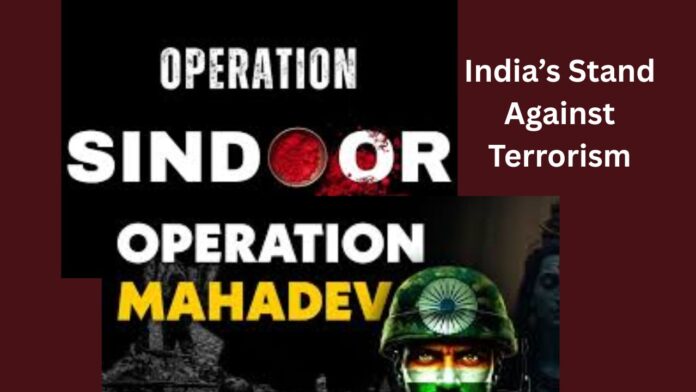
Operation SINDOOR to Operation MAHADEV: India’s Stand Against Terrorism

0
Operation SINDOOR to Operation MAHADEV

Operation SINDOOR to Operation MAHADEV: India’s Stand Against Terrorism

India’s long-standing battle against terrorism has taken a new and assertive direction. India has now shifted from reactive diplomacy to proactive counter-terror operations, which shows that New Delhi has made it clear that the time is not to tolerate threats that hamper its sovereignty and India will not compromise with the safety of its citizens. From the Operation SINDOOR to Operation MAHADEV: India’s stand against terrorism has made it clear that it is time to proactively counter terror threats both domestically and beyond its borders.

Click here for 50 International Relations MCQs

India’s Stand Against Terrorism

“India’s Prime Minister Shri Narendra Modi has redefined India’s policy against terrorism, which now says that any attack on Indian soil will be considered as an act of war,” and our defence minister Shri Rajnath Singh emphasised that India always prioritised peace over war but when our sovereignty is attacked, it is necessary for India to respond. According to him, if Pakistan continues to support terrorism, it will be prepared to pay a heavier price.

Terrorism is not a problem of today, but has been a persistent challenge for India, particularly the cross-border terrorism originating from Pakistan and insurgent activities in the northeastern and central parts of India. The 2008 Mumbai attack was a major turning point in transforming India’s counter-terror policies from defensive diplomacy to offensive, intelligence-based operations.

What is Operation SINDOOR?

Operation SINDOOR was launched on 7th May 2025 in retaliation for the Pahalgam terrorist attack of 22 April 2025, in which 26 innocent civilians lost their lives while enjoying their vacation in Baisaran valley, popularly known as mini-Switzerland of India, located in Pahalgam, Kashmir. This terror attack broke the hearts of all Indians, as all Hindu male visitors were targeted by the terrorist. Operation SINDOOR was a targeted retaliation to destroy the terror infrastructure not only in the Line of Control but deeper inside Pakistan.

Operation SINDOOR is India’s missile strike on Pakistan for accusing Pakistan of supporting cross-border terrorism. India’s multi-agency intelligence confirmed nine major camps were targeted in the operation. This operation was meticulously planned and an intelligence-led effort to destroy the terrorism related infrastructures and to ensure to avoid civilian harm.

How Pakistan Reacted to Operation SINDOOR?

In the reaction to Operation SINDOOR, Pakistan initiated a series of retaliatory drone and UCAV attacks targeting key Indian airbases and logistics infrastructure. These attempts were carefully neutralised by India’s active air defence system. Pakistan’s army launched a blitz of mortar shells on Jammu to kill civilians and to damage homes and religious sites. The conflict started with the drone battle, but on 10th May India accused Pakistan that attacked on Indian air bases, including the Sirsa air base, while Pakistan launched Operation Bunyan-un-Marsoos against India’s Operation SINDOOR.

Operation SINDOOR to Operation MAHADEV: India’s Stand Against Terrorism PDF Download

What is the role of the Indian Air Force in Operation SINDOOR?

The Indian Air Force played a crucial role by conducting precise airstrikes on terror bases like Nur Khan Air Base and Rahimyar Khan Air Base of Pakistan, and the Air Force also protected Indian airspace from enemy drones and aircraft using its advanced air defence systems like the Akash missile system and older but effective systems like Pechora and OSA-AK. The Integrated Air Command and Control System effectively manages and runs all the defence operations smoothly, that pictured India’s air defence strength to the world.

How did Operation SINDOOR come to an end?

After the four-day military conflict (7th May-10th May,2025), both states declared a ceasefire after the discussion between the DGMOs of both countries.

What is Operation Mahadev?

Operation Mahadev is a joint operation by the Indian Army and Jammu & Kashmir Police to eliminate the mastermind behind the Pahalgam attack of 22 April 2025 and two other terrorists connected with Lashkar-e-Taiba in an encounter in the forests near Dachigam National Park, Srinagar. In this operation, one terrorist was killed who had his involvement in the Sonamarg Tunnel attack of 2024. The terrorists are identified as Suleiman Shah, Jibran, and Hamza Afghani.

Operation SINDOOR to Operation MAHADEV

Operation SINDOOR and Operation MAHADEV are symbols of India’s growing power and military strength and the commitment to keeping its people safe. India has made it clear that terrorism will not be tolerated in any form. If defensive diplomacy doesn’t work, India will take strong military action against terrorist groups as well as the sponsoring states. Operation SINDOOR will be remembered as a major stand in India’s defence history as a sign of courage, teamwork, and national unity to fight against terrorism, where, through Operation MAHADEV, India tries to provide a clear message that India will not spare terrorists anymore.

Comparison of Nuclear Doctrine of India and Pakistan


Political Science Books and Authors List

0
Political Science Books and Authors List

Political Science Books and Authors List


Political science is a dynamic and diverse discipline that defines the theory and practice of politics, government and policies. There is a wide range of books written on Political Science but among all these books, some important books offered foundational knowledge and insight into various aspects of political science.

Among all Political Science Books and Authors List, here we will cover the most important books written on feminism by the eminent feminists across the globe. Books on Feminism are more asked in examinations so the list of Books on Feminism are more useful in terms of examination for all political science student.

Here you can click for – Political Science Books and Authors List PDF Download


Important Books on Feminism

Feminism is a political, social, and intellectual movement that aims to achieve gender equality, mainly focusing on ending the systemic oppression and discrimination faced by women throughout history. Feminism challenges patriarchal structures and aims to transform society so that women and marginalized genders enjoy the same rights, opportunities, and respect as men.


Click here for –Political Science Questions 

Liberal Feminism

Liberal feminism focuses on gender equality through political and legal reform and emphasizes on individual rights, freedom, and equal opportunities for women.

  • Liberal feminism Advocates for equal access to education, employment, and political participation and focuses on removing legal barriers to women’s full participation in public life.
  • It believes in gradual reform, not revolutionary change.

Important Thinkers of Liberal Feminism are Mary Wollstonecraft, Betty Friedan, Martha Nussbaum, Susan Moller Okin and others.

Liberal Feminists and Their Books:


Marry Wollstonecraft

1. A Vindication of the Rights of Woman (1792)


2. MARIA or The Wrongs of Women (1798)


3. A Vindication of the Rights of Men (1790)


4. Thoughts on the Education of Daughters (1787)


John Stuart Mill


1. A System of Logic (1843)

2. Principles of Political Economy (1848)

3. On Liberty (1859)

4. Considerations on Representative Government (1861)

5. Utilitarianism (1863)

6. The Subjection of Women (1869)

7. Three Essays on Religion (1874- posthumously)


       Betty Friedan 1. The Feminine Mystique (1963)

2. It Changed My Life: Writings on the Women’s Movement (1976)

3. The Second Stage (1981)

4. Beyond Gender: The New Politics of Work and Family (1997)


Susan Moller Okin

1. Women in Western Political Thought (1979)

2. Justice, Gender, and the Family (1989)

3. Is Multiculturalism Bad for Women?  (1999)


Martha Nussbaum


1. Cultivating Humanity: A Classical Défense of Reform in Liberal Education – 1997

2. Sex and Social Justice – 1999

3. Women and Human Development: The Capabilities Approach – 2000

4. Frontiers of Justice: Disability, Nationality, Species Membership – 2006

5. Creating Capabilities: The Human Development Approach – 2011

6. Political Emotions: Why Love Matters for Justice – 2013

7. Anger and Forgiveness: Resentment, Generosity, Justice – 2016

8. The Monarchy of Fear: A Philosopher Looks at Our Political Crisis – 2018


Carole Pateman

1. Participation and Democratic Theory – 1970

2. The Sexual Contract – 1988

3. The Disorder of Women: Democracy, Feminism, and Political Theory – 1989

4. The Contract and Domination – 2007


Alison M. Jaggar

1. Feminist Politics and Human Nature – 1983

2. Living with Contradictions: Controversies in Feminist Social Ethics – 1994

3. Just Methods: An Interdisciplinary Feminist Reader – 2008

4. Gender and Global Justice – 2014


Amy Gutmann

1. Liberal Equality – 1980

2. Democratic Education – 1987

3. Democracy and Disagreement (with Dennis Thompson) – 1996

4. Why Deliberative Democracy? (with Dennis Thompson) – 2004

5. Identity in Democracy – 2003


Radical Feminism

Radical feminism blames patriarchy as the fundamental system of oppression over women. It calls for a radical change in society by eliminating male dominance.

  • According to Radical feminism, the root causes of women’s oppression is particularly in sexuality, reproduction, and violence.
  • It criticised male-dominated structure of society particularly in family, media, religion, and law.
  • Radical feminism seeks for complete cultural and societal transformation.

Prominent Thinkers of radical feminism are Kate Millett, Shulamith Firestone, Andrea Dworkin, Catharine MacKinnon and others.


Radical Feminists and Their Books


Shulamith Firestone


1.The Dialectic of Sex: The Case for Feminist Revolution1970


Kate Millett Sexual Politics1970


Andrea Dworkin

1.Woman Hating – 1974

2. Pornography: Men Possessing Women – 1981

3. Intercourse – 1987


                  Catharine A. MacKinnon

1. Sexual Harassment of Working Women: A Case of Sex Discrimination – 1979

2. Toward a Feminist Theory of the State – 1989


Mary Daly

1. The Church and the Second Sex – 1968

2. Gyn/Ecology: The Metaethics of Radical Feminism – 1978

3. Pure Lust: Elemental Feminist Philosophy – 1984


Sheila Jeffreys

1.The Spinster and Her Enemies – 1985

2. Anticlimax: A Feminist Perspective on the Sexual Revolution – 1990

3. The Industrial Vagina: The Political Economy of the Global Sex Trade – 2008


Adrienne Rich

1.Of Woman Born: Motherhood as Experience and Institution – 1976

2. Compulsory Heterosexuality and Lesbian Existence – 1980 (essay)


Robin Morgan

Sisterhood Is Powerful: An Anthology of Writings from the Women’s Liberation Movement – 1970

The Demon Lover: The Roots of Terrorism – 1989


Virginia Woolf A Room of One’s Own-1929


Socialist Feminism

Socialist feminism links gender oppression to capitalism and class exploitation. It argues that liberation can only be achieved by addressing both economic and gender inequalities.

Key Ideas:

  • Sees patriarchy and capitalism as interconnected systems of oppression.
  • Focuses on labour, unpaid domestic work, and economic dependence of women.
  • Calls for a transformation of both economic and social structures.

Prominent Thinkers:
Alexandra Kollontai, Juliet Mitchell, Iris Marion Young, Angela Davis.

 Social Feminists and Their Books

Juliet Mitchell Woman’s Estate – 1971


Heidi Hartmann The Unhappy Marriage of Marxism and Feminism: Towards a More Progressive Union – 1979


Silvia Federici Caliban and the Witch: Women, the Body and Primitive Accumulation – 2004

Western Political Thought Book List

Angela Davis Women, Race, and Class – 1981


Lise Vogel Marxism and the Oppression of Women: Toward a Unitary Theory – 1983


Zillah Eisenstein

The Radical Future of Liberal Feminism – 1981

Capitalist Patriarchy and the Case for Socialist Feminism – 1979


Nancy Hartsock Money, Sex, and Power: Toward a Feminist Historical Materialism – 1983


Maria Mies Patriarchy and Accumulation on a World Scale – 1986

Eco-Feminism -with Vandana Shiva-1993

Barbara Ehrenreich & Deirdre English For Her Own Good: Two Centuries of the Experts’ Advice to Women


  1. Ecofeminism

    Ecofeminism connects the domination of women with the exploitation of nature. It criticizes both patriarchy and ecological destruction by highlighting shared patterns of control and subjugation.

  • Focuses on the interconnection between ecological issues and gender justice.
  • Challenges dualisms like man/woman and nature/culture.
  • Advocates for sustainability, care ethics, and respect for all forms of life.

Prominent Thinkers of ecofeminism are Vandana Shiva, Carolyn Merchant, Maria Mies and others.

Eco-feminists and their Books

Vandana Shiva Staying Alive: Women, Ecology and Development – 1988

Ecofeminism – 1993 (with Maria Mies)

Earth Democracy: Justice, Sustainability, and Peace – 2005


Carolyn Merchant The Death of Nature: Women, Ecology, and the Scientific Revolution – 1980

Radical Ecology: The Search for a Livable World – 1992

Ariel Salleh Ecofeminism as Politics: Nature, Marx, and the Postmodern – 1997

Eco-Sufficiency and Global Justice – 2009

Greta Gaard Ecofeminism: Women, Animals, Nature – 1993

Critical Ecofeminism – 2017

Rosemary Radford Ruether Gaia and God: An Ecofeminist Theology of Earth Healing – 1992

Women and Redemption: A Theological History – 1998

Val Plumwood Feminism and the Mastery of Nature – 1993

Environmental Culture: The Ecological Crisis of Reason – 2002


Political Science Books and Authors List

CUET Political Science Question Paper 2025

0
CUET Political Science Question Paper 2025


CUET Political Science Question Paper 2025

Here is CUET Political Science Question Paper 2025. The CUET Entrance for PG admission is held every year by NTA. Students in large numbers give the exam for getting admission in India’s various central universities.

Q.1 Who among the following thinkers highlighted the myths about men being ‘just warriors’ and women being ‘beautiful souls’ to be saved?

  1. Cynthia Enloe
  2. J. Ann Tickner
  3. Jean Bethke Elshtain
  4. Judith Butler

1.1

2.2

3.3

4.4

Ans: 3.3

2. In Australia which system decides election to the House of Representatives.

  1. Alternative voting method
  2. Hare system
  3. Condorcet method
  4. Second ballot system

1.1

2.2

3.3

4.4

Ans: 1.1

Q.3. First UN Secretary General Trygve Lie was associated with which country?

  1. Austria
  2. Sweden
  3. Norway
  4. Egypt

1.1

2.2

3.3

4.4

Ans: 3.3

Q.4 Match the LIST-I with LIST-II

LIST-I                                               LIST-II

(Forms of Political Participation)               (Participants)

  1. Conventional participation                 I. Signing petitions
  2. Less conventional participation          II. Political violence, including terrorism,                   Assassination
  3. Illegal participation                 III. Voting in elections
  4. Public opinion as a form of Participation IV. Public concerns by the members of an                                     affected community

Choose the correct answer from the options given below:

  1. A-III, B-1, C-II, D-IV
  2. А-ІІІ, В-IV, C-I, D – II
  3. A-II, B-I, C-III, D -IV
  4. A-IV, B-III, C-II, D-I

Ans: 4. 4

Q.5 According to J.S. Mill, the rational ground for coercion of an individual is-

  1. justice
  2. self-preservation
  3. happiness
  4. general will

1.1

2.2

3.3

4.4

Ans:  2.2

Q.6 The headquarter of UNESCO is located in:

  1. New York
  2. Paris
  3. Geneva
  4. Rome

1.1

2.2

3.3

4.4

Ans: 2.2

Q.7 Which of the following statement are CORRECT about Rousseau’s concept of the General Will?

  1. Rousseau in his ‘ Discourse on Political Economy’ stated the concept of the General Will.
  2. General Will is driven towards the preservation and welfare of the whole and of every part.
  3. The General Will comes from all and applies to all.
  4. It embodies the free rational will of all.

Choose the correct answer from the options given below:

  1. A, B and D only
  2. A, B and C only
  3. A, B, C and D
  4. B, C and D only

1.1

2.2

3.3

4.4

Ans: 3.3

Q.8 Knowledge without justice ought to be called cunning rather than wisdom, who said these words.

  1. Locke
  2. Cicero
  3. Plato
  4. Alice Stone

1.1

2.2

3.3

4.4

Ans: 3.3

CUET POLITICAL SCIENCE QUESTION PAPERS 2025

Q.9 How many days of work is guaranteed to rural households under Mahatma Gandhi National Rural Guarantee Act (MGNREGA)?

  1. 200 days work per year to all rural households
  2. 100 days work per year to all rural households
  3. 300 days’ work per year to all rural households
  4. 150 days’ work per year to all rural households.

1.1

2.2

3.3

4.4

Ans: 2. 2

Q.10 Chronologically arrange the events in the Cold War period.

  1. Berlin Wall is constructed
  2. Communist China joins the UN
  3. Soviet invasion of Czechoslovakia
  4. Berlin Blockade

Choose the correct answer from the options given below:

  1. A, B, C, D
  2. D, A, C, B
  3. B, A, D, C
  4. C, B, D, A

1.1

2.2

3.3

4.4

Ans: 2. 2

11. Which amendment to the Indian Constitution sought to implement economic justice and equality of opportunity assured by the Preamble vide Article 38 (2)?

  1. First Amendment Act
  2. Forty-second Amendment Act
  3. Forty-fourth Amendment Act
  4. Sixty-fifth Amendment Act

1.1

2.2

3.3

4.4

Ans: 2.2

12.  Chronologically arrange the amendments to the Indian Constitution.

  1. Added Schedule IX
  2. First Schedule was amended to transfer certain territories implementing the Indo-Pakistan agreements.
  3. Mizoram was made a State
  4. Amended the Preamble

Choose the correct answer from the options given below:

  1. A, B, C, D
  2. A, B, D, C
  3. B, A, D, C
  4. C, B, D, A

1.1

2.2

3.3

4.4

Ans: 3.3

13.  Which among the following option is NOT a foreign policy alternative according to Kautilya in his Arthashastra?

  1. Dvaidhibhava
  2. Vigraha
  3. Asana
  4. Dana

1.1

2.2

3.3

4.4

Ans: 4.4

Q.14 Who was the founder of Bolshevik Communist party?

  1. Vladimir Lenin
  2. Joseph Stalin
  3. Nikita Khrushchev
  4. Leonid Brezhnev

1.1

2.2

3.3

4.4

Ans: 1. 1

15 Which among the following is not the principal aim of the UN as elaborated in its founding Charter?

  1. To safeguard peace and security
  2. Developing friendly relations among nations
  3. To uphold respect for international law
  4. To ensure economic development for minorities

1.1

2.2

3.3

4.4

Ans: 4.4

16. Who among the following political thinkers considered democracy to be “the tyranny of the majority”?

  1. Alexis de Tocqueville
  2. James Madison
  3. James Mill
  4. Jeremy Bentham

1.1

2.2

3.3

4.4

Ans: 1. 1

Q.17 Who among the following political thinkers said “Man is born free and he is everywhere in chains”?

  1. Thomas Hobbes
  2. John Locke
  3. Jean-Jacques-Rousseau
  4. Karl Marx

1.1

2.2

3.3

4.4

Ans: 3.3

18 Who among the following political thinkers considered law as ‘nothing else than the command of the sovereign in the exercise of his sovereign power’?

  1. Hugo Grotius
  2. John Austin
  3. Jean Bodin
  4. Thomas More

1.1

2.2

3.3

4.4

Ans: 2.2

19. Who among the following political thinkers believed that Satya is the essence of Dharma?

  1. Raja Rammohan Roy
  2. V.D. Savarkar
  3. M.K. Gandhi
  4. B.R. Ambedkar

1.1

2.2

3.3

4.4

Ans:3.3

20. Morgenthau’s principles of political realism are:

  1. Politics is rooted in permanent and unchanging human nature which is basically self-centred.
  2. Politics is an autonomous sphere of action and cannot therefore be reduced to morals.
  3. International Politics is an arena of conflicting self-interests.
  4. The ethics of international relations is situational ethics which is very different from private morality.

Choose the correct answer from the option given below:

  1. B, C and D only
  2. A, B, C and D
  3. A, B and C only
  4. A, B and D only

1.1

2.2

3.3

4.4

Ans: 2.2

CUET Political Science Question Paper 2025 PDF Download

21. According to Rawls, the correct principles of justice are determined by:

  1. God
  2. Nature
  3. The connection of Society
  4. the choice that rational individuals would make a hypothetical situation

1.1

2.2

3.3

4.4

Ans: 4.4

22. The Energy Conservation Act in India was passed in which year?

  1. 2004
  2. 2001
  3. 2005
  4. 2010

1.1

2.2

3.3

4.4

Ans: 2.2

23 According to Aristotle, what was the perverted form of Aristocracy?

  1. Tyranny
  2. Democracy
  3. Oligarchy
  4. Monarchy

1.1

2.2

3.3

4.4

Ans:  3.3

24 Where was the SAARC established?

  1. Delhi
  2. Kathmandu
  3. Lahore
  4. Dhaka

1.1

2.2

3.3

4.4

Ans: 4.4

Q.25 Match the LIST-I with LIST-II

LIST-I (Model of Public Policy)                     LIST-II (Meaning of Public Policy)

  1. Incremental Model                      I.Policy as rational choice in competitive situations.
  2.  Rational Model                           II.Policy represents the preferences of specific interests of the society.
  3. Game Theory                         III.Policy as continuation of previous policy withminimum change
  4. Elite Model                           IV. Policy is one that is correctly designed to maximize the’ net value achievement.

Choose the correct answer from the options given below:

  1. A-1, B-II, C-III, D -IV
  2. A-I, B-III, C-II, D-IV
  3. A-I, B-II, C-IV, D-III
  4. А-ІІІ, В-IV, C-I, D-II

1.1

2.2

3.3

4.4

Ans: 4.4

26 Who among the following adopted an open door’ policy?

  1. China
  2. EU
  3. Japan
  4. USA

1.1

2.2

3.3

4.4

Ans: 1.1

27 In which year was the Convention on the Elimination of All Forms of Discrimination against Women adopted?

  1. 1965
  2. 1966
  3. 1979
  4. 1984

1.1

2.2

3.3

4.4

Ans: 3.3

28 Arrange the following events related to India-Pakistan relations in a chronological order.

  1. Operation Gibraltar
  2. Kargil War
  3. Karachi Agreement
  4. Indus Water Treaty

Choose the correct answer from the options given below:

  1. A, B, C, D
  2. A, C, B, D
  3. B, A, D, C
  4. C, D, A, B

1.1

2.2

3.3

4.4

Ans: 4.4

29 Which approach of Comparative Politics focuses on the ‘interests of actors’?

  1. The Interpretive approach
  2. The Structural approach
  3. The Institutional approach
  4. The Rational-Choice approach

1.1

2.2

3.3

4.4

Ans: 4.4

Q.30. Which of the following has Veto power in the security council?

  1. America
  2. India
  3. Pakistan
  4. Brazil

1.1

2.2

3.3

4.4

Ans:1.1

Q. 31. Which of the following is NOT an organ of the state as presented in the Saptanga Theory in Arthashastra?

  1. Amartya

2. Durga

3. Shakti

4. Kosha

1.1

2.2

3.3

4.4

Ans: 3.3

32. Who developed the ‘Gaia hypothesis’?

  1. James Lovelock
  2. Ernst Friedrich Schumacher
  3. Murray Bookchin
  4. Rudolph Bahro

1.1

2.2

3.3

4.4

Ans: 1.1

33. Which provision of the Indian Constitution ensures free and fair elections of the Panchayat?

  1. Article 243 D
  2. Article 243 F
  3. Article 243 G
  4. Article 243 K

1.1

2.2

3.3

4.4

Ans: 4.4

34. Which provision was inserted in the constitution by the 86th constitution amendment act?

  1. Article 19
  2. Article 21 A
  3. Article 51 A
  4. Article 100

1.1

2.2

3.3

4.4

Ans:2.2

35. The eighth schedule of the Indian constitution is related to

  1. Official Indian language
  2. Fundamental Right
  3. Fundamental Duties
  4. Supreme Court

1.1

2.2

3.3

4.4

Ans:1.1

36. The first elected president of Russia was:

  1. Leonid Brezhnev
  2.  Nikita Khrushchev
  3. Joseph Stalin
  4. Boris Yeltsin

1.1

2.2

3.3

4.4

Ans: 4.4

37. Who among the following thinkers said, “The nation … is an imagined political community-imagined; both as, inherently limited and sovereign…”?

  1. Benedict Anderson
  2. Charles Tilly
  3. Eric Hobsbawn
  4. Miroslav Hroch

1.1

2.2

3.3

4.4

Ans: 1.1

38 Which among the following statements are CORRECT about Mahatma Gandhi’s idea on Ahimsa?

  1. Mahatma Gandhi believed that Satya led him to ahimsa.
  2. He distinguished between the positive and negative meanings of Satya and ahimsa.
  3. Ahimsa was the manifest part of Truth.
  4. Ahimsa is the means and Truth is the end.

Choose the correct answer from the options given below:

  1. A, B and D only
  2. A, B and C only
  3. A, B, C and D
  4. B, C and D only

1.1

2.2

3.3

4.4

Ans: 3.3

Q.39 Match the LIST-I with LIST-II

LIST-I                                                                                        LIST-II

(Year)                                                                          (International Events)

I. 1991                                        A. Hiroshima and Nagasaki atomic bomb attack

II. 1956                                        B. Formation of WTO

III. 1945                                       C. Soviet Invasion of Hungary

IV. 1995                                         D. Collapse of the Soviet Union

Choose the correct answer from the options given below:

  1. A-I, B-II, C-III, D-IV
  2. A-III, B-IV, C-II, D-I
  3. A-II, B-IV, C-III, D-I
  4. A-III, В-IV, C-I, D-II

1.1

2.2

3.3

4.4

Ans: 2.2

40. Which of the following statements are CORRECT about the single-transferable vote system?

  1. The single-transferable vote system was first proposed by Thomas Hare.
  2. It is widely used in the Republic of Ireland.
  3. In the States with multi-member constituencies, the representatives are elected from each constituency.
  4. The voters get to cast multiple votes.

Choose the correct answer from the options given below:

  1. A, B and D only
  2. A, B and C only
  3. A, B, C and D
  4. B, C and D only

1.1

2.2

3.3

4.4

Ans:2.2

41 Which part of the Indian Constitution provides for the secular character of our polity?

  1. Fundamental Duties
  2. The Preamble
  3. Directive Principles of state policy
  4. Article 75

1.1

2.2

3.3

4.4

Ans: 2.2

42 What was the name of the organization founded by Vinayak Damodar Savarkar?

  1. Mitra Mela
  2. Shatru Mela
  3. Aaptamitra Mela
  4. Anushilan Samiti

1.1

2.2

3.3

4.4

Ans: 1.1

43. Amnesty International campaigns for the protection of the –

  1. Infants
  2. Senior Citizens
  3. Environment
  4. Human Right

1.1

2.2

3.3

4.4

Ans: 4.4

44. Which provision in the Indian Constitution provides for procedural safeguards against arbitrary arrest and detention?

  1. Article 3
  2. Article 21
  3. Article 22
  4. Article 29

1.1

2.2

3.3

4.4

Ans: 3.3

45. In which year the Croatia became the 28th member of the European Union?

  1. 2010
  2. 2011
  3. 2013
  4. 2014

1.1

2.2

3.3

4.4

Ans: 3.3

46 Which among the following statements are CORRECT about policy formulation process in India?

  1. All policies must have the approval of the cabinet.
  2. Legislators are concerned with central political tasks of policy formulation.
  3. Administrative agencies are delegated with discretionary authority known as ‘the rule making process.
  4. The Judiciary has no power to modify policies.

Choose the correct answer from the options given below:

  1. A, B and D only
  2. A, B and C only
  3. A, B, C and D
  4. B, C and D only

1. 1

2.2

3.3

4.4

Ans: 2.2

47 Which country joins SAARC in 2007?

  1. Afghanistan
  2. Nepal
  3. Bangladesh
  4. Pakistan

1.1

2.2

3.3

4.4

Ans: 1.1

48 An international organisation which sets the rules for global trade?

  1. WTO
  2. World Bank
  3. WHO
  4. UNICEF

1.1

2.2

3.3

4.4

Ans: 3.3

49 The ASEAN Regional Forum (ARF) was established in which years?

  1. 1994
  2. 1992

3.1996

  1. 1998

1.1

2.2

3.3

4.4

Ans: 1.1

50. Sri Vijayapuram is the capital of which union territory of India?

  1. Chandigarh
  2. Lakshadweep
  3. Puducherry
  4. Andaman and Nicobar Island

1.1

2.2

3.3

4.4

Ans: 2.2

51 Which of the following Court decisions declared the ‘Right to Privacy’ to be a fundamental right?

  1. K S Puttaswamy vs. Union of India
  2. Joseph Shine vs. Union of India
  3. National Legal Services Authority vs. Union of India
  4. Suresh Kumar Kaushal vs. Naz Foundation

1.1

2.2

3.3

4.4

Ans: 1.1

52. An attempt to integrate historical and political science research methods in seeking to explain a specific outcome is called-

  1. Process tracing
  2. Analytic narrative
  3. Path dependence
  4. Sequencing

1.1

2.2

3.3

4.4

Ans: 2.2

53. Arrange the following events in a chronological order

  1. Korean War
  2. Vietnam War
  3. Non-Proliferation Treaty
  4. Strategic Arms Limitation Talks-I

Choose the correct answer from the options given below

  1. A, B, C, D
  2. A, D, C, B
  3. A, C, B, D
  4. B, A, C, D

1.1

2.2

3.3

4.4

Ans: 3.3

54 Which among the following statements are CORRECT about policy evaluation process in India?

  1. The office of Comptroller and Auditor General (CAG) of India is regarded as an arm of the Parliament.
  2. The Comptroller and Auditor General (CAG) has broad authority to audit the operation and finance of the governmental activities.
  3. The CAG provides adequate funds for government activities
  4. The CAG ensures the accountability of the executive to the parliament.

Choose the correct answer from the options given below:

  1. A, B and D only
  2. A, B and C only

3, A, B, C and D

  1. B, C and D only

1.1

2.2

3.3

4.4

Ans: 1.1

55 Who among the following political thinkers consider the anarchical self-help system to be a compelling factor for States to maximise their relative power positions?

  1. Hans J. Morgenthau
  2. John Mearsheimer
  3. Kenneth Waltz
  4. Marysia Zalewski

1.1

2.2

3.3

4.4

Ans: 3.3

56 Who among the following political thinkers considered the state of nature as “war of every man against every man”.?

  1. Thomas Hobbes
  2. John Locke
  3. J. J. Rousseau
  4. Machiavelli

1.1

2.2

3.3

4.4

Ans: 1.1

57 Which among the following is NOT the major law of dialectical materialism?

  1. The law of unity and conflict of opposites
  2. The law of negation of negation
  3. The law of transition of quantity into quality
  4. The law of equality of materialistic dialectics

1.1

2.2

3.3

4.4

Ans:4.4

Q.58 The concept of ‘bounded rationality’ was given by-

  1. Charles Lindblom
  2. David Easton
  3. Herbert Simon
  4. Thomas R. Dye

1.1

2.2

3.3

4.4

Ans:3.3

59 The salient features of hybrid regimes are:

  1. They suffer weaknesses in political culture and in the functioning of government.
  2. The government pressure on opposition party and candidates are common.
  3. Civil society and rule of law are weak.
  4. Once elected, the government shows full sense of constitutional restraints.

Choose the correct statement / statements:

  1. A, B and C only
  2. A only
  3. B, C, and D only
  4. A. B, C and D

1.1

2.2

3.3

4.4

Ans:1.1

60. In which year did the Supreme Court decide that the citizens of India have the Right to Negative Vote by exercising NOTA?

1.2006

  1. 2009

3.2013

  1. 2016

1.1

2.2

3.3

4.4

Ans:3.3

Q.61 Chronologically arrange the following initiatives in monitoring of the international environment.

  1. United Nations Conference on Human Environment in Stockholm
  2. Vienna Convention for the Protection of the Ozone Layer
  3. Kyoto Protocol to the UNFCCC
  4. Brundtland Commission Report

Choose the correct answer from the options given below:

  1. A, B, D, C
  2. A, B, C, D
  3. D. A, B, C
  4. C. B. D. A

1.1

2.2

3.3

4.4

Ans:1.1

62 Who defined citizenship as ‘full membership of a community’?

  1. David Easton
  2. Paul Henson Appleby
  3. T.H. Marshall
  4. Anthony Giddens

1.1

2.2

3.3

4.4

Ans: 3.3

63 What is the key guide to statecraft in the realist tradition?

  1. National Interest
  2. Universal brotherhood
  3. Moral Principles
  4. Cross-border flows and common values

1.1

2.2

3.3

4.4

Ans: 1.1

64 Who among the following thinkers conceptualised positive and negative freedom?

  1. J. J. Rousseau
  2. Hegel
  3. Jean Francois Lyotard
  4. Isaiah Berlin

1.1

2.2

3.3

4.4

Ans: 4.4

65. Who among the following thinkers gave the concept of ‘virtu’?

  1. Machiavelli
  2. Thomas Hobbes
  3. John Locke
  4. John Rawls

1.1

2.2

3.3

4.4

Ans: 1.1

66 Chronologically arrange the following events related to SAARC.

  1. SAARC Energy Centre was created through Dhaka Declaration.
  2. Interim unit of SAARC-Disaster Management Unit has been set up in Gandhinagar.
  3. Ambassador Mr. Md. Golam Sarwar of Bangladesh assumed office of Secretary General of SAARC.
  4. The first meeting of SAARC Inter-Governmental Expert Group on Poverty Alleviation and Sustainable Development Goals was held in Colombo.

Choose the correct answer from the options given below:

  1. B, D, C, A
  2. A, C, B. D
  3. D. B. A. C
  4. A, B, C, D

1.1

2.2

3.3

4.4

Ans: 3.3

67 Arrange in a chronological order Karl Marx’s idea of historical stages of society?

  1. Primitive Communism
  2. Slave Society
  3. Feudalism
  4. Capitalism

Choose the correct answer from the options given below:

  1. B, C, D, A
  2. A, C, B, D
  3. A, C, D, B
  4. A, B, C, D

1.1

2.2

3.3

4.4

Ans: 4.4

68 Which among the following statements are CORRECT for feminism?

  1. The ‘first wave’ of feminism was closely associated with the women’s suffrage movement, which emerged in the 1840s and 1850s.
  2. The ‘second wave’ of feminism arose during the 1960s and expressed, in addition to the established concern with equal rights, the more radical and sometimes revolutionary demands of the growing Women’s Liberation Movement.
  3. Feminist politics has fragmented and undergone a process of de-radicalisation since the early 1970s.
  4. Mary Wollstonecraft’s ‘Women’s Estate’ is regarded as the first text of modern feminism.

Choose the correct answer from the options given below:

  1. A, B and D only
  2. A, B and C only
  3. A, B, C and D
  4. B, C and D only

1.1

2.2

3.3

4.4

Ans: 2.2

69 Arrange the following amendments to the Constitution in a chronological order.

  1. Incorporation of Dadra and Nagar Haveli as Union Territory
  2. Abolition of Election Tribunals
  3. Abolition of Privy Purse
  4. Reducing the age for voting rights from 21 to 18 years

Choose the correct answer from the options given below:

  1. A, B, C, D
  2. A, C, B, D
  3. B, A, D, C
  4. C, B, D, A

1.1

2.2

3.3

4.4

Ans: 1.1

Here are some Political Science Questions for CUET 2026

Q.70 Which of the following statements are CORRECT about the Original Jurisdiction of the Supreme Court of India?

  1. The Original jurisdiction of the Supreme Court is dealt with in Article 132 of the Constitution.
  2. Under Article 131 of the Constitution, the functions of the Supreme Court are purely federal in character.
  3. It is confined to disputes between different units of the federation
  4. The Original Jurisdiction concerns to any dispute between the Government of India and one or more State.

Choose the correct answer from the options given below:

  1. A, B and D only
  2. A and C only
  3. B and C only
  4. B, C and D only

1.1

2.2

3.3

4.4

Ans: 3.3

Q.71 Match the LIST-I with LIST-II

LIST-1                                                                                      LIST-II

(Theory/Model/Approach)                                                      (Author/Thinker)

A. Group Theory                                                   I. David Easton

B. Rational Model                                                  II. Charles E. Lindblom

C. Incremental Model                                            III. Earl Latham

D. System Approach                                         IV. Herbert Simon, Yehezkel Dror, and                                          Thomas R Dye

Choose the correct answer from the options given below:

  1. A-IV, B-II, C-I, D-III
  2. A-II, B-III, C-IV, D-I
  3. A-III, B-IV, C-II, D-I
  4. A-II, В-1, C-IV, D – III

1.1

2.2

3.3

4.4

Ans: 3.3

Q.72 Which among the following thinkers argued that there is a wide gap between the global poor and rich?

  1. John Rawls
  2. Amartya Sen
  3. Thomas Nigel
  4. Thomas Pogge

1.1

2.2

3.3

4.4

Ans: 4.4

Here are some political science questions with answer PDF

73 Who is the author of the book ‘Administrative Behaviour’?

  1. Harold Lasswell
  2. Herbert Simon
  3. Larry N Gerston
  4. Yehezkal Dror

1.1

2.2

3.3

4.4

Ans: 2.2

74 Who gave the idea of a constituent assembly for framing the Indian Constitution in 1934?

  1. M. N. Roy
  2. Jawahar Lal Nehru
  3. B. R. Ambedkar
  4. Khan Abdul Gaffar Khan

1.1

2.2

3.3

4.4

Ans: 1.1

75 Which term of nationalism was advocated by Giuseppe Mazzini?

  1. Liberal Nationalism
  2. Malignant Nationalism
  3. Cosmopolitan Nationalism
  4. Radical Nationalism

1.1

2.2

3.3

4.4

Ans: 1.1

SSB Political Science PGT 2024 Questions with Answers

30 Comparative Politics MCQs with Answers

0
Comparative Politics MCQs with Answers

30 Comparative Politics MCQs with Answers

In our Political Science Question series, we added more than 30 Comparative Politics MCQs with Answers that can help political science students in their journey of preparation for CUET PG entrance tests, as well as for the Political Science NTA NET exam.

  1. Who is known as the father of Comparative Politics?

a) Plato

b) Aristotle

c) Tocqueville

d) Machiavelli

Ans: b) Aristotle

2. According to whom, “Comparative Politics is the study of the forms of political organization, their properties, correlations, variations and modes of change”?

a) Chilcote

b) G. Smith

c) Maxey

d) Karl Deutsch

Ans: b) M.G. Smith

3. According to whom, “comparative politics is “the study of patterns of national governments in the contemporary world”.

a) Maxey

b) John Blondel

c) O Neil

d) Freeman

Ans: b) John Blondel

4. Who stated that “Comparative Politics is a comparative analysis of the various forms of government and diverse political institutions”?

A) Almond

b) Powell

c) E. A Freeman

d) Ronald Chilcote

Ans: c) E.A Freeman

5. Who wrote the book “Constitutional Government and Democracy”?

a) Carl J. Friedrich

b) H. Tawney

c) Jean Blondel

d) Lasswell and Kaplan

Ans: a) Carl J. Friedrich

6. The “Modern Democracies” book is written by whom?

a) Carl J. Friedrich

b) James Byce

c)Jean Blondel

d)Lasswell and Kaplan

Ans:b) James Bryce

7. Who gave the idea of the ‘end of history’?

a) Fukuyama

b) David Apter

c) Sidney Verba

d) Jean Blondel

Ans: a) Fukuyama

8. Who wrote the book “What is Political Philosophy”?

a) James Bryce

b) Leo Strauss

c) Roy Macridis

d) M. Lipset

Ans: b) Leo Strauss

Click Here for more – Political Science Questions

9. Which level of analysis in comparative politics focuses on the interactions between countries?

a) Individual level

b) Domestic level

c) Systemic level

d) State level

Ans: c) Systemic level

10. Who used the comparative method to study the constitutions and to classify the systems of government?

a) Aristotle

b) Machiavelli

c) Montesquieu

d) Lord Bryce

Ans: a) Aristotle

11. Which among the following comes under the scope of comparative politics and government?

a) Political Experiences

b) Political institutions

c) Political Behaviour

d) All of the above

Ans:d) All of the above

12. Who among the following used the comparative method in determining the qualities of a successful ruler?

a) Aristotle

b) Machiavelli

c) Montesquieu

d) Lord Bryce

Ans: b) Machiavelli

Approaches to the Study of Comparative Politics

13. Which approach of comparative politics emerged as a response to the historicism of the 19th century?

a) Modern approach

b) System approach

c) Traditional approach

d) All of the above

Ans: c) Traditional approach

14. “Modern Political Regime” book written by whom?

a) Roy Macridis

b) Peter Markl

c) David E. Apter

d) Harry Eckstein

Ans: a) Roy Macridis

15. Philosophical approach is also known as –

a) Speculative approach

b) Ethical approach

c) Meta-physical approach

d) All of the above

Ans: d) All of the above

16. Which of the following approaches is best represented by George H. Sabine?

a) Philosophical approach

b) Historical approach

c) Institutional approach

d) Legal approach

Ans:b) Historical approach

17. The General system approach was expounded by

a) Morton Kaplan

b) Ludwig Von Bertalanffy

c) David Easton

d) Karl Deutch

Ans: b) Ludwig Von Bertalanffy

18. The input-output approach and structural-functional approach have been derived from:

a) The Quantitative approach

b) Institutional approach

c) Sociological approach

d) The General System approach

Ans: d) The General System approach

19. According to whom, “Political science is the study of shaping and sharing of power?

a) Lasswell and Kaplan

b) Paul Janet

c) Gabriel Almond

d) David Easton

Ans: a)Lasswell and Kaplan

20. Who gave the black-box model?

a) Lasswell and Kaplan

b) Paul Janet

c) Gabriel Almond

d) David Easton

Ans: d) David Easton

21. Who wrote the book “Process of Government”?

a) Robert A. Dahl

b) Talcott Parson

c) David Easton

d) Arthur Bentley

Ans: d)Arthur Bentley

22. The main exponent of the Political communication approach?

a) Karl Deutsch

b) Max Weber

c) Bingham Powell

d) Carl J. Friedrich

Ans: a) Karl Deutsch

23. How many input functions are given by Gabriel Almond in his structural-functional approach?

a) 3

b) 4

c) 5

d) None of the above

Ans:b)  4

24. Who among the following is not an exponent of the philosophical approach to study comparative Politics?

a) Plato

b) Kant

c) Bacon

d) Bentham

Ans: d) Bentham

25. Who wrote the book “Rationalism in Politics”?

a) Michael Oakeshott

b) Max Weber

c) Bingham Powell

d) Carl J. Friedrich

Ans: a) Michael Oakeshott

26. Which among the following approaches “treats the state primarily as an organization for the creation and enforcement of law”?

a) Legal approach

b) Institutional approach

c) System approach

d) Quantitative approach

Ans: a)Legal Approach

27. Which approach studies the formal structures of the political organizations?

a) Traditional approach

b) Legal approach

c) Normative approach

d) Institutional approach

Ans:d) Institutional approach

28. Which one of the following is not an input function of the political system?

a) Political recruitment

b) Interest articulation

c) Rule adjudication

d) Political communication

Ans: c) Rule adjudication

29. David Easton stated that in the political system, there are  2 kinds of political inputs –

a) Demand and Support

b) Pressure and threat

c) Political parties

d) Voting and accountability

Ans: a) Demand and Support

30. Who said, “The State is a march of God on Earth”?

a) Plato

b) Kant

c) Bacon

d) Hegel

Ans: d) Hegel

Comparative Politics MCQs with Answers PDF Download

20 Important MCQ on Political Theory

SSB Political Science PGT 2023 Questions with Answers

0
SSB Political Science PGT 2023 Questions with Answers

SSB Political Science PGT 2023 Questions with Answers

Here are the previous year’s papers of SSB Political Science PGT 2023 Questions with Answers that will be helpful for the political science students who are preparing for the PGT examination for the next term.


  1. Traditional approach to study Political Science gives emphasis to:

(A) Facts

(B) Values

(C) Objectivity

(D) Precision

Ans: (B) Values

  1. Who is accepted as intellectual God Father of Behaviouralism?

(A) Robert Dahl

(B) David Easton

(C) Charles E. Merriam

(D) Harold Lasswell

Ans: (C) Charles E. Merriam

3.”Liberty is the opposite of over government ‘- is said by:

(A) J.S. Mill

(B) T.H. Green

(C) H.J. Laski

(D) Seeley

Ans: (D) Seeley

  1. Who said: ‘Political liberty without economic equality is a myth’:

(A) G D. H. Cole

(B) John Locke

(C) J.S. Mill

(D) M.K. Gandhi

Ans: (A) G D. H. Cole

  1. From the given list of books and authors, identify the wrong pair:

(A) Principles of Social and Political Theory: Nozick

(B) A Theory of Justice: John Rawls

(C) Das Capital: Karl Marx

(D) New Aspects of Politics: Charles E. Merriam

Ans: (A) Principles of Social and Political Theory: Nozick

SSB Political Science PGT 2024 Questions with Answers

  1. Who is considered to be a Utopian Socialist?

(A) Feuerbach

(B) Robert Owen

(C) Rousseau

(D) Friedrich Engels

Ans: (B) Robert Owen

  1. How does radical feminism understand ‘Patriarchy’?

(A) A system of cooperation

(B) A system of oppression

(C) A form of patriotism

(D) Monogamous family

Ans: (B) A system of oppression

  1. Identify the underlying principle behind affirmative action?

(A) Establishing formal equality by law

(B) Eliminating cumulative effects of past inequalities

(C) Equal distribution of wealth

(D) Promoting equal opportunities and competition on equal terms

Ans: (B) Eliminating cumulative effects of past inequalities

  1. What does ‘Decline of Political Theory’ mean?

(A) Decline of normative political theory

(B) Decline of empirical theory

(C) End of ideology

(D) Decline of modernity

Ans: (A) Decline of normative political theory

  1. The author of ‘The Power Elite’ is:

(A) Pareto (B) Mosca

(C) Max Weber (D) C. Wright Mill

Ans: (D) C. Wright Mill

  1. What are ‘forms’ according to Plato?

(A) Intelligible and unchanging objects, accessible to the mind but not to the senses

(B) Intelligible and unchanging objects, accessible to the senses but not to the mind

(C) Shape of ideal society

(D) Shape of ideal state

Ans: (A) Intelligible and unchanging objects, accessible to the mind but not to the senses

  1. What according to Aristotle is the nature of man?

(A) Social

(B) Political

(C) Cultural

(D) Religious

Ans: (B) Political


  1. What was the most essential part of human behaviour that Machiavelli considered to

understand politics?

(A) Empirical Theory

(B) Empirical Thinking

(C) Empirical Reality

(D) Empirical Reasoning

Ans: (C) Empirical Reality

  1. Who is known as a Commonsense Philosopher during the Seventeenth Century?

(A) Hobbes (B) Locke

(C) Rousseau (D) Francis Bacon

Ans: (B) Locke

  1. Read the following statements and identify the wrong one:

(a) Machiavelli suggested power politics is the means and authoritarian absolute

State is the end.

(b) J.J. Rousseau was known as of Father of Liberalism’.

(c) Hobbes’ main concern was to argue that effective government, whatever its

form, must have absolute authority.

(A) Only ‘a’ (B) Only ‘b’ (C) Only ‘c’ (D) both ‘b’ and ‘c’

Ans: (D) both ‘b’ and ‘c’

  1. Which philosopher greatly influenced Karl Marx’s thought?

(A) Hobbes

(B) Kant

(C) Hegel

(D) Rousseau

Ans: (C) Hegel

Click Here for the major Political Science Career Options in India

  1. Robert Nozick bases his theory of Justice on:

(A). Desire

(B) Need

(C) Merit

(D) Entitlement

Ans: (D) Entitlement

  1. Dialectic method was used for the first time by whom?

(A) Plato

(B) Socrates

(C) Hegel

(D) Marx

Ans: (B) Socrates

  1. Which one below is not related to John Rawl’s Theory of Justice?

(A) Veil of ignorance

(B) Lexical Priority

(C) Lockean Provision

(D) Original Position

Ans: (C) Lockean Provision

  1. Which among the following books deals with Marx’s theory of ‘Alienation’?

(A) Communist Manifesto

(B) Capital

(C) Economic and Philosophical Manuscripts

(D) Theses on Feuerbach

Ans: (C) Economic and Philosophical Manuscripts

23. Who is respected as Father of New Public Administration?

(A) Fred Riggs

(B) Dwight Waldo

(C) Frank Marini

(D) C.I. Barnard

Ans: (A) Fred Riggs

  1. Herbert Simon proposed a new concept of administration based on the methodology of:

(A) Logical Positivism

(B) Decision Making

(C) Bounded Rationality

(D) Satisfying

Ans: (A) Logical Positivism

  1. How many principles of management were propounded by Henry Fayol?

(A) 8

(B) 10

(c) 12

(D) 14

Ans: (D) 14

  1. Among the following thinkers, who is the odd one in terms of their specialisation?

(A) Maslow

(B) Taylor

(C) Herzberg

(D) Likert

Ans: (B) Taylor

  1. In which type of recruitment, the system for higher position is open, for all qualified candidates?

(A) Ordinary recruitment

(B) Passive recruitment

(C) Direct recruitment

(D) Recruitment by promotion

Ans: (D) Recruitment by promotion

  1. Which principle is appropriate for promotion in Civil Service:

(A) Merit and Seniority

(B) Merit and Educational Qualification

(C) Merit and Experience

(D) Experience and Seniority

Ans: (A) Merit and Seniority

  1. Among the following which one is not related to Public Policy types?

(A) Assertive

(B) Regulatory

(C) Restictive

(D) Facilitating

Ans: (A) Assertive

  1. Public Services (Qualification for Recruitment) Committee was headed by:

(A) V. T Krishnamachari

(B) Y.K. Alagh

(C) A.R Mudaliar

(D) Satish Chandra

Ans: (C) A.R Mudaliar

  1. Who is known for his association with Systems Approach:

(A) Auguste Comte

(B) David Held

(C) David Easton

(D) Robert Dahl

Ans: (C) David Easton

  1. What does authority imply?

(A) Compliance through a moral obligation on the part of the ruled to obey

(B) Compliance through coercion of the ruled to obey

(C) Exercise of power as divine right of rulers

(D) Exercise of power unrestricted by law

Ans: (D) Exercise of power unrestricted by law

  1. Which one below is not source of legitimacy?

(A) Ideology

(B) Coercion

(C) Structure

(D) Personal Qualities

Ans: (B) Coercion

  1. Which approach considered Social Stratification as a necessary structure in each Society?

(A) Marxist

(B) Elitist

(C) Functionalist

(D) System’s approach

Ans: (C) Functionalist

  1. Who defined Political Participation as the involvement of the members of Society in the

decision-making process?

(A) Almond and Powell

(B) David Easton

(C) Lasswell

(D) Sidney Verba

Ans: (A) Almond and Powell

  1. Who said:’Political Culture is the set of attitudes, beliefs and sentiments, which give

order and meaning to a political process and which provide the underlying assumptions

and rules that govern behaviour in the political systems?

(A) Sydney Verba

(B) Lucian Pye

(C) Comte

(D) V.O. Key

Ans: (B) Lucian Pye

  1. Identify the improper match below:

(A) M. N. Srinivas: Sanskritisation

(B) Almond: Structural Functionalism

(C) Strauss: Positivism

(D) Max Weber: Class struggle

Ans: (D) Max Weber: Class struggle

  1. Which concept below is close to the idea of Political change, like Political integration,

Political differentiation, Political secularization, etc.?

(A) Political socialisation

(B) Political participation

(C) Political modernisation

D) Political mobilization

Ans: (C) Political modernisation

  1. Identify the wrong pair:

(A) Hans Morgenthau: Political Realism

(B) Richard Snyder: Game Theory

(C) E. H. Carr: Twenty Years of Crisis

(D) Hedley Bull: Anarchical Society

Ans: (B) Richard Snyder: Game Theory

  1. Name the Author: Study of International Relations:

(A) E.H. Carr

(B) Langsam

(C) Quincy Wright

(D) Peter Calvocoressi

Ans: (C) Quincy Wright

  1. Identify the intangible element of power from the list given below?

(A) Technology

(B) Ideology

(C) Natural resources

(D) Population

Ans: (B) Ideology

  1. System by which states attempt to prevent war is known as:

(A) Alliance

(B) Balance of Power

(C) Collective Security

(D) Diplomacy

Ans: (C) Collective Security

  1. The First NAM Conference was held at Belgrade in 1961 and Belgrade was privileged to

host NAM for the second time. Identify the year from the choices:

(A) 1976

(B) 1986

(C) 1989

(D) 1992

Ans: (A) 1976

  1. India hosts G-20 Summit 2023. Which Country will host the next Summit?

(A) Brazil

(B) South Africa

(C) Japan

(D) Italy

Ans: (B) South Africa

  1. Comprehensive Test Ban Treaty was open for signature in the year:

(A) 1978

(B) 1989

(C) 1995

(D) 1996

Ans: (D) 1996

  1. Indo-Soviet Treaty of Friendship and Cooperation was signed during:

(A) Dec 1970

(B) April l971

(C) July 1971

(D) August 1971

Ans: (D) August 1971


  1. Name the Chairperson of UN General Assembly Commission to draft Human Rights:

(A) Pen-Chen Chang

(B) Elanor Roosevelt

(c) Charles Malik

(D) Hans J Morgenthau

Ans: (B) Elanor Roosevelt

  1. The large-scale Afro-Asian conference during April, 1955 was held at:

(A) Bandung

(B) New Delhi

(C) Colombo

(D) Bangkok

Ans: (A) Bandung

  1. Where are the ideological bases of the Indian Constitution written in a summary fashion?

(A) Fundamental Rights

(B) Directive Principles of State Policy

(C) Preamble

(D) Fundamental Duties

Ans: (B) Directive Principles of State Policy

  1. Who said: The Constitution of India is a Social Document?

(A) Ivor Jennings

(B) Granville Austin

(C) B.R. Ambedkar

(D) B.N. Rau

Ans: (B) Granville Austin

  1. The IXth Schedule to the Constitution was inserted by:

(A) Parliamentary Resolution

(B) presidential proclamation

(C) First Amendment Act

(D) Second Amendment Act

Ans: (C) First Amendment Act

  1. Identify the wrong pair in the list given below:

(A) First Information and Broadcasting Minister of India: Sardar Vallabhbhai Patel

(B) Chairman of the State Reorganization Commission: Asaf Alli

(C) Basic Structure Doctrine: Keshav Ananda Bharti Case

(D) Insertion of Article 21A in the Constitution: 86th Constitution Amendment Act

Ans: (B) Chairman of the State Reorganization Commission: Asaf Alli

  1. Which Article of the Constitution mentions ‘Duties of the Prime Minister’?

(A) Article 74

(B) Article 75

(C) Article 78

(D) Article 86

Ans: (C) Article 78

  1. Which Fundamental Right was described as the heart and soul of the Constitution by

Dr. B.R. Ambedkar?

(A) Right to Equality

(B) Right to Freedom

(C) Right against Exploitation

(D) Right to Constitutional Remedies

Ans: (D) Right to Constitutional Remedies

  1. The purpose of the inclusion of Directive Principles is to establish:

(A) Social democracy

(B) Social and Economic democracy

(C) Political democracy

(D) Party less democracy

Ans: (B) Social and Economic democracy

SSB Political Science PGT 2023 Questions with Answers PDF Download

  1. Which of the following was held to be basic structure of the Constitution in S.R Bommai vs. Union of India?

(A) Secularism

(B) Liberalism

(C) Human Dignity

(D) Socialism

Ans: (A) Secularism

  1. Which amendment of the Constitution put a sealing on the total number of members of the Council of Ministers with the Prime Minister at 15% the strength of the Lok Sabha?

(A) 90th

(B) 91st

(C) 92th

(D) 93th

Ans: (B) 91st

  1. In the given list, which party is the National Party?

(A) Nationalist Congress Party

(B) Trinamool Congress Party

(C) Aam Admi Party

(D) Janata Dal (United)

Ans: (C) Aam Admi Party

  1. Article 263 which provides Inter-State Council as an instrument for cooperation, coordination and evolution of common policies, was founded in the year:

(A) 1952

(B) 1967

(c) 1977

(D) 1990

Ans: (D) 1990

  1. Read the following statements and identify which one is fully correct:

(a) The First Mid-term poll for Lok Sabha was held in 1971.

(b) Sri Neelam Sanjeeva Reddy is the only President to be elected unopposed.

(c) The Dinesh Goswami Committee on electoral reforms recommended the use of EVM in the

elections.

(A) Only ‘a’

(B) Only ‘b’

(C) Only’b’and’c’

(D) Only ‘a and ‘b’

Ans: (D) Only ‘a and ‘b’

  1. Justice Sarkaria Commission was set up by whose Government to examine the relationship and balance of power between the centre and States in India?

(A) Charansingh

(B) Indira Gandhi

(C) Rajiv Gandhi

(D) V.P. Singh

Ans: (C) Rajiv Gandhi

  1. Which Article of the Indian Constitution states that the decisions of the Supreme Court are binding on all courts of the country?

(A) Article 138

(B) Article 140

(C) Article 141

(D) Article 142

Ans: (C) Article 141

  1. What is ‘Eurocentrism‘ in Comparative politics?

(A) It argues that Europe is at the centre of the world

(B) It believes that Europe should rule the world

(C) It presumes the superiority and universal applicability of Western institutions and values

(D) It is about the unification of European political systems

Ans: (A) It argues that Europe is at the centre of the world

  1. There are two types of Sovereign States: Unitary and Federal. Out of 193 member states of the UN, how many states are unitary in nature?

(A) 101

(B) 123

(C) 146

(D) 166

Ans: (D) 166

  1. The US Constitution is the first written one. From which year the US Constitution became effective?

(A) 1783

(B) 1787

(C) 1789

(D) 1792

Ans: (C) 1789

  1. Read the following statements and identify. Which one is fully correct:

(a) US Federal System is known as Strong centre with strong States.

(b) Senatorial curtesy is a long standing unwritten, unofficial and non-binding constitutional convention in the US.

(c) The best-known power of the US Supreme Court is the doctrine of judicial review established in the case of Marbury vs. Madison (1803).

(A) Only ‘a’

(B) Only ‘b’

(C) Only ‘c’

(D) ‘a’, ‘b’, and ‘c’

Ans: (D) a’, ‘b’, and ‘c’

  1. During whose government in the UK, the Citizens’ Charter was introduced?

(A) Margaret Thatcher

(B) Tonny Blair

(C) John Major

(D) Borris Johnson

Ans: (C) John Major

  1. Currently British Conservative Party is in power and the Labour Party is the major opposition party. After them which political party enjoys third position in British House of Commons?

(A) Green Party

(B) Scottish National Party

(C) Liberal Democrats

(D) Democratic Unionist Party

Ans: (B) Scottish National Party

  1. Read the statements and identify the wrong one, if any:

(a) The Government of PRC is a Unitary, Marrdst-Leninist one party auttroritarian system.

(b) The State Council in PRC is an executive body.

(c) Deng era-initiated market socialism in China

(A) Only ‘a’

(B) Only ‘b’

(C) All are correct

(D) All are wrong

Ans: (C) All are correct

  1. In respect of Swiss Federal Council, which one is incorrect observation?

(A) It is a plural executive

(B) It has six members in the Council

(C) The origin of the Council owes to the Constitution of 1848

(D) It is the Federal Cabinet of the Confederation

Ans: (B) It has six members in the Council

  1. ‘Landsgemeinde’ is related to which country?

(A) USA

(B) UK

(C) Switzerland

(D) China

Ans: (C) Switzerland

  1. ‘Filibustering is a means to in USA.

(A) Attract the attention of the members of the legislature

(B) Delay a vote on bill

(C) Demand for revision of bill

(D) Move an amendment of the Constitution

Ans: (B) Delay a vote on the bill

  1. Bihar and Odisha province was separated from the Bengal Presidency in:

(A) 1905

(B) 1911

(C) 1912

(D) 1919

Ans: (C) 1912

  1. After becoming a separate province, Odisha had a Legislature having:

(A) 56 members

(B) 60members

(C) 64 members

(D) 91 members

Ans: (C) 64 members

  1. The first Congress government in British Odisha was headed by:

(A) Krushna Chandra Gijapati

(B) H.K. Mahtab

(C) N.K. Choudhury

(D) Biswanath Das

Ans: (D) Biswanath Das

  1. How many times has Odisha been under President’s Rule?

(A) Fourth time

(B) Five times

(C) Six times

(D) Seven times

Ans: (C) Six times

  1. Odisha is known for active regional party formation. Identify the wrong mention of the year of formation of such parties:

(A) JanaCongress: 1966

(B) UtkalCongress:1969

(C) B.J.D:1998

(D) Odisha Ganaparishad:2000

Ans: (D) Odisha Ganaparishad:2000

  1. Identify the correct sequence of Conformative Acts done in the State of Odisha for the three-tier

Panchayat Raj System under 73rd Constitutional Amendment Act:

(A) 1994,1995,1997

(B) 1995,1996,1997

(C) 1995,1996,1998

(D) 1994,1996,1998

Ans: (C) 1995,1996,1998

  1. The B.J.D- B.J.P coalition Government functioned during:

(A) 1999-2008

(B) 2000-2007

(C) 2000-2008

(D) 2000-2009

Ans: (D) 2000-2009

  1. Odisha has 314 Panchayat Samitis (Blocks) out which the number of Tribal Blocks is:

(A) 118

(B) 119

(C) 120

(D) 121

Ans: (B) 119

  1. In which year, the High Court of Odisha was inaugurated by Justice H.L. Kania Chief Justice of the Federal Court of India?

(A) 1937

(B) 1947

(C) 1948

(D) 1949

Ans: (C) 1948

  1. Which political coalition formed the Government in Odisha after the midterm election of 1971?

(A) Swatanta-JanaCongress

(B) Utkal Congress- Swatantra

(C)Swatantra- PSP- Jana Congress

(D) Swatantra – Utkal Congress- Jharkhand Party

Ans: (B) Utkal Congress- Swatantra

  1. Read the statements and identify the incorrect one/ones:

(a) Kautilya’s Theory of State was to promote the moral and material happiness and

welfare of its people.

(b) The Mauryan Empire was divided into four provinces with Pataliputra as the capital. The head of the provincial administration was the Viceroy.

(c) Kautilya’s Theory there was no explicit of the social contract.

(A) Only ‘c’

(BI Only ‘b’ and ‘c’

(C) Only ‘a and ‘b’

(D) All are correct

Ans: (D) All are correct

  1. Identify the incorrect option provided in relation to Raja Rammohan Roy:

(A) Father of the Indian Renaissance

(B) Critical of Atmiya Sabha

(C) A Scholar of comparative religion

(D) Stood for freedom of the press

Ans: (B) Critical of Atmiya Sabha

  1. Who observed that religious toleration is crucial for the growth of democracy?

(A) Raja Rammohan Roy

(B) Gopal Krishna Gokhale

(C) Swami Dayananda

(D) Vivekananda

Ans: (A) Raja Rammohan Roy

  1. Identify the philosopher who lived during the period when liberalism was at the crossroads?

(A) Raja Rammohan Roy

(B) Gopal Krishna Gokhale

(C) Jawaharlal Nehru

(D) B.R. Ambedkar

Ans: (A) Raja Rammohan Roy

  1. Who introduced extremist national sentiments in Congress?

(A) Naoroji

(B) Aurobindo

(C) B.G Tilak

(D) M.K. Gandhi

Ans: (B) Aurobindo

  1. Identify the wrong mention with regard to books and authors:

(A) Gitarahasya: B. G Tilak

(B) My Explanation on Truth: M. K. Gandhi

(C) Annihilation of Caste: B. R. Ambedkar

(D) The Life Divine: Aurobindo Ghosh

Ans: (B) My Explanation on Truth: M. K. Gandhi

  1. ‘Hind Swaraj’ by Gandhi is famous for which one ofthe following?

(A) Constructive social work

(B) Non-cooperation movement

(C) Passive resistance

(D) Critic of Western civilization

Ans: (D) Critic of Western civilization

  1. Read the following statements and identify the correct one/ones:

(a) Nehruvian idea of Socialism was influenced by Fabianism.

  1. b) POVERTY AND UN-BNTISH RULE IN INDIA was authored by the Grand Oldman

of India

(c) B.R Ambedkar was a crusader for social justice.

(A) Only’a’

(B) Only ‘b’

(C) Only ‘a’ and ‘c’

(D) All are correct

Ans: (D) All are correct

  1. In which year Gandhi’s Book on Hind Swaraj (Indian Home Rule) was published?

(A) 1908

(B) 1909

(C) 1915

(D) 1920

Ans: (B) 1909

  1. Swami Vivekananda attended World Parliament of Religions and intoduced Hinduism to

America. In which year and at which venue he did it?

(A) 1892-Chicago

(B) 1892-Philadelphia

(C) 1893-Chicago

(D) 1893- Boston

Ans: (C) 1893-Chicago

  1. According to Donald Stones, the four Ps of Development Administration do not include:

(A) Priorities

(B) Plans

(C) Projects

(D) Programs

Ans: (A) Priorities

  1. Development Administration has meaning for the developing world Identify the thinker who connected third world administration with development:

(A) Henry Fayol

(B) Dwright waldo

(C) F.W. Riggs

(D) Montgomery

Ans: (C) F.W. Riggs

  1. Ecology of Administration means:

(A) Social Setting to which administration relates

(B) Administration of environment

(C) Structure of Administration

(D) Law for protection of environment

Ans: (A) Social Setting to which administration relates

  1. Planning Commission of India as a non-statutory body was established in the year:

(A) 1949

(B) 1950

(C) 1951

(D) 1952

Ans: (B) 1950

  1. The period known as ‘PLAN HOLIDAY’ is:

(A) 1965-69

(B) 1966-69

(c) 1967-69

(D) 1989-92

Ans: (B) 1966-69

  1. Green Revolution initiated in 1960s intended:

(A) Self-reliant economy

(B) Boost for agriculture production to contain imports

(C) initiate era of industialization

(D) None of these

Ans: (B) Boost for agriculture production to contain imports

  1. Article 243 ZD relates to:

(A) Regular election for PR Bodies

(B) System of Audit of PRs

(C) District Planning Committee

(D) Composition of Zilla Parishad

Ans: (C) District Planning Committee

  1. The National Development Council was establislred in:

(A) August 1952

(B) September, 1952

(C) January 1953

(D) August 1953

Ans: (A) August 1952

  1. NlTl Ayog replaced Planning Commission in the year:

(A) 2014

(B) 2015

(C) 2016

(D) 2017

Ans: (B) 2015

  1. Which is not a feature of Good Governance?

(A) Consensus oriented

(B) Responsiveness

(C) Free and fair elections

(D) Transparency

Ans: (C) Free and fair elections

20 Important MCQs on Public Policy and Administration in India

SSB Political Science PGT 2024 Questions with Answers

0
SSB Political Science PGT 2024 Questions with Answers

SSB Political Science PGT 2024 Questions with Answers

These Political Science MCQs are the previous year’s SSB Political Science PGT 2024 Questions with Answers. SSB conducts PGT (Post-Graduate Teachers) examination for the aided colleges of Odisha.

SSB Political Science PGT asked 100 MCQ-based questions from all the papers of Political Science, and time duration of the examination is 90 minutes.

Here are the SSB Political Science PGT 2024 Questions with Answers.

  1. ‘Political Science is the Science of power’ was commented by –

(A) Harold Lasswell

(B) Harold Laski

(C) Robert Dahl

(D) Karl Popper

Ans: (A) Harold Laswell

  1. Who among the following described democracy as the tyranny of the majority?

(A) John Dunning

(B)Alexis de Tocqueville

(C) Abraham Lincoln

(D) James Madison

Ans: (B)Alexis de Tocqueville

  1. Who said: “Behavioural approach is a protest movement in Political Science”?

(A) Easton

(C) Laswell

(B)Robert Dahl

(D) David Held

Ans: (A) Easton

  1. From the given list, identify the wrong pair of Books and Author:

(A) Modern Political Analysis – Robert Dahl

(B) An Introduction to Political Theory-Carl Friedrich

(C) The Political Theory of Possessive Individualism-Karl Popper

(D) Political Theory-Philosophy, Ideology and Science – Andrew Hacker

Ans: (C) The Political Theory of Possessive Individualism-Karl Popper

5 With regard to the exponent on ‘Positive Liberalism’, find out the odd name in the list.

(A) Hegel

(B) J.S. Mill

(C) H. J. Laski

(D) MacIver

Ans: (A) Hegel

SSB Political Science PGT 2024 Questions with Answers PDF Download

  1. Identify the post-Behaviouralist in the list:

(A) Karl Popper

(B) David Easton

(C) David Held

(D) Robert Dahl

Ans: (B) David Easton

  1. Which law is free from moral and religion considerations?

(A) Natural Law

(B) Divine Law

(C) Rule of Law

(D) Positive Law

Ans: (D) Positive Law

  1. Who called state the supreme legitimate authority entrusted with the exercise of violent force over a group of people?

(A) Machiavelli

(B) Hobbes

(C) Weber

(D) Hegel

ANS: (C) Weber

  1. Who was the exponent of Scientific Socialism?

(A) Saint-Simon

(B) Marx

(C) Elizabeth Stanton

(D) Catherine Rottenberg

Ans: (B) Marx

  1. Who is known to have founded ‘Feminism’?

(A) Mary Wollstonecraft

(C) Susan Wendell

(B) Fourier

(D) Owen

Ans. (A) Mary Wollstonecraft

  1. Which theory accepts state as a natural institution?

(A) Social Contract Theory

(B) Divine Origin Theory

(C) Evolutionary Theory

(D) Organic Theory of the State

Ans: (D) Organic Theory of the State

  1. ‘The Zig Zag of Politics’, an article was written by:

(A) Hobbes

(B) Nozick

(C) Rawls

(D) Marx

Ans: (B) Nozick

  1. Match List-I with List-II and choose the correct answer:

List-I (Thinkers) List-II (Ideas)

(a) Machiavelli – (i) Revolt against reason

(b) Hobbes -(ii) Moral in difference

(c) Locke -(iii) Instinct of self-preservation

(d) Rousseau -(iv) Natural right to property

(A)a-ii, b-iii, c-iv, d-i

(B) a-i, b-ii, c-iii, d-iv

(C) a-ii, b-iv, c-i, d-iii

(D) a-iv, b-iii, c-ii, d-i

Ans: (A)a-ii, b-iii, c-iv, d-i

14.Who made no distinction between state and society?

(A)Plato

(B) Machiavelli

(C) Locke

(D) Hegel

Ans: (D) Hegel

  1. Who among the following conceived society as a cooperative venture for mutual advantage, more or less self-sufficient and necessarily governed by rules?

(A) Robert Nozick

(B) John Rawls

(C) F. Hayek

(D) Karl Marx

Ans: (B) John Rawls

  1. The doctrine of proportional equality was propounded by –

(A) Locke

(C) Karl Marx

(B) Aristotle

(D) Plato

  1. The concept of Forced Freedom was given by –

(A) JS Mill

(B) Rawls

(C) Rousseau

(D) Nozick

Ans: (C) Rousseau

  1. Who authored ‘Wage, Labour and Capital’?

(A) Engels

(B) Marx

(C) Stalin

(D) Mao

Ans: (B) Marx

19 The ‘Power Theory’ is well explained by whom in his political philosophy:

(A) Hobbes

(C) Mill

(B) Locke

(D) Rousseau

Ans: (A) Hobbes

  1. Match List-I with List-II and choose the correct answer:

List-I                                               List-II

(a) Modern Political Thinker –          (i) Plato

(b) Positivist School –                         (ii) Machiavelli

(c) Normative Political Theory –       (iii) Comte

(d) Scientific/Inductive Method –     (iv) Aristotle

(A) a-ii, b-iii, c-i, d-iv

(B) a-ii, b-iv, c-iii, d-i

(C) a-i, b-ii, c-iii, d-iv

(D) a-iv, b-iii, c-ii, d-i

Ans: (A) a-ii, b-iii, c-i, d-iv

  1. Marx believed that capitalism was fundamentally an exploitative system and it will be ultimately replaced by –

(A) Feudalism

(B) Primitive Communism

(C) Communism

(D) Anarchism

Ans: (C) Communism


  1. Identify the correct pair of Books and Authors:

List-I (Books)                        List-II (Authors)

(A) New Public Administration – Dwight Waldo

(B) Review of Public Administration – L. D. White

(C)Theories of Public Administration – Ferrel Heady

(D)Political Theories of Modern States – Peter Self

Ans: (A) New Public Administration – Dwight Waldo

  1. Who rejected the principles of administration as myths and proverbs?

(A) Herbert Simon

(B) Robert Dahl

(C) Luther Gulick

(D) Chester Barnard

Ans: (A) Herbert Simon

  1. Who proposed a new concept of administration based on the methodology of logical positivism?

(A) Dwight Waldo

(B) Robert Dahl

(C) Peter Self

(D) Herbert Simon

Ans: (D) Herbert Simon

  1. Which one is a Classical Organisation Theory?

(A) Contingency Theory

(B) Scientific Management Theory

(C) Systems Approach Theory

(D) Socio-Technical Approach

Ans: (B) Scientific Management Theory

  1. In ‘Hierarchy’ the term scalar means:

(A) Steps

(B) Process

(C) Ladder

(D) Positive

Ans: (C) Ladder

  1. The British concept of Civil Service Neutrality was laid down by –

(A) Fulton Committee

(B) Asselton Committee

(C)Northcote-Trevelyan Committee

(D) Masterman Committee

Ans: (C)Northcote-Trevelyan Committee

  1. The relations between specialists and generalists were dealt by –

(A) Haldane Committee

(B) Fulton Committee

(C) Masterman Committee

(D) Northcote-Trevelyan Committee

Ans: (B) Fulton Committee

  1. An effective Training Design should be-

(A) Learner-focused

(B) System-focused

(C) Environment-focused

(D) Company focussed

Ans: (A) Learner focussed

  1. During which part of the public policy cycle does the government explore potential policy response?

(A) Agenda Setting

(B) Policy Formulation

(C) Policy Implementation

(D) Decision Making

Ans: (D) Decision Making

31.Who among the following considered delegation as a myth in organisational theory?

(A)Terry

(B) Mooney

(C) Follet

(D) Miller

Ans: (C) Follet

  1. Which one of the following was not supported by Taylor in his Scientific Management Theory?

(A) Efficiency Evaluation Experts

(B) Concept of Economic Man

(C) Functional Foremanship

(D) Standardisation of Tools

Ans: (A) Efficiency Evaluation Experts

  1. Who is known as ‘Father of Political Sociology’?

(A) Weber

(B) Durkheim

(C) Comte

(D) Parsons

Ans: (C) Comte

  1. Who advocated social stratification based on class, status and party?

(A) Max Weber

(C) Talcott Parsons

(B) Karl Marx

(D) Durkheim

Ans: (A) Max Weber

  1. Who from below authored “The Methodology of Social Sciences’?

(A) Marx

(B) Weber

(C) Pareto

(D) Mosca

Ans: (B) Weber

  1. Identify major contributions of Vilfred Pareto:

(A) Circulation of elites

(B) Organic analogy

(C) Conspicuous consumption

(D) Dialectical materialism

Ans: (A) Circulation of elites

  1. Which one is legitimate form of power?

(A) Ritual

(B) Social Action

(C) Authority

(D) System

Ans: (C) Authority

  1. Who coined the term “Political Socialisation”?

(A) Marx

(B) H.H. Hyman

(C) Weber

(D) Lipset

Ans: (B) H.H. Hyman

(39) Who said, “Modernisation consists of three basic elements-the rationalisation of authority, the differentiation of structure and the expansion of political participation”?

(A) Huntington – Apter

(B) Verba

(C) Apter

(D) Lipset

Ans: (C) Apter

  1. Which theory propagates that civic participation will increase only when people feel that the cost of involvement are low while the benefits are higher?

(A) Functionalist Theory

(B) Modernisation Theory

(C) Rational Choice Theory

(D) Marxist Theory

Ans: (C) Rational Choice Theory

  1. Name the author of ‘Twenty-year ofCrisis’:

(A) Gathrone Hardy

(B) Langsam

(C) EH Carr

(D) Samuel Huntington

Ans: (C) EH Carr

  1. Which one is not a Core Value of Political Realism?

(A) Aggression

(B) Statism

(C) Survival

(D) Self-Help

Ans: (A) Aggression

  1. Identify correct pair of Thinker and Theory in IR:

(A) Systems Theory —Fred Riggs

(B) Decision Making Theory – Richard Snyder

(C) Game Theory – Hedley Bull

(D) Bargaining Theory – Morton Kaplan

Ans: B) Decision Making Theory – Richard Snyder

  1. Identify the venue where the First NAM conference was held –

(A) Cairo

(B) Belgrade

(C) Geneva

(D) Paris

Ans: (B) Belgrade

  1. During whose government India’s Look East Policy was adopted?

(A) Rajiv Gandhi

(B) P.V. Narsimha Rao

(C) A. B. Vajpai

(D) N. Modi

Ans: (B) P.V. Narsimha Rao

  1. The First Multilateral UN Conference on Disarmament was held in –

(A) 1963

(B) 1969

(C) 1978

(D) 1988

Ans: (C) 1978

  1. Who is Father of Neo-Realism?

(A) George Kennan

(B)Kenneth Waltz

(C) Miller

(D) Hans Morgenthau

Ans: (B)Kenneth Waltz

  1. Identify intangible power:

(A) Territory

(B) Naval Power

(C) Industrial strength

(D) Diplomacy

Ans: (D) Diplomacy

  1. Where is the headquarter of the WТО?

(A) Washington

(B) Ottawa

(C) Geneva

(D) Paris

Ans: (C) Geneva

  1. Identify the organisation of which India is not a member:

(A) Shanghai Cooperation

(B) OIC

(C) BRICS

(D) NAM

Ans: (B) OIC

  1. In which session of AICC the resolution for PURNA SWARAJ was passed?

(A) Karachi

(B) Lucknow

(C) Lahore

(D) Nagpur

  1. Under which article of the Constitution of India is the President given the power of pardon?

(A) Art. 72

(B) Art. 73

(C) Art. 76

(D) Art. 78

Ans: (A) Art. 72

  1. By which amendment the original preamble was modified?

(A) 24th

(B) 29th

(C) 42nd

(D) 44th

Ans: (C) 42nd

  1. In which judgment the Apex Court used the Doctrine of Prospective Overruling?

(A) Shankari Prasad

(B) Golaknath

(C) Keshavanand

(D) Minerva Mills

Ans: (B) Golaknath

  1. The provision of the Right to Free Trial is given in –

(A) Art. 19

(B) Art. 20

(C)Art. 21

(D) Art. 22

Ans: (C)Art. 21

  1. By which amendment was a ceiling imposed on the size of the Council of Ministers?

(A) 89th (B) 90th (C) 91st (D) 93rd

Ans: (C) 91st

  1. Who said, “The Constitution of India is a Social Document”?

(A) Ivor Jennings

B) G Austin

(C) Paul Brass

(D) Rajni Kothari

Ans: B) G Austin

  1. Identify mismatch between Article and the provisions of the Constitution.

(A) Article 61: Impeachment of the President

B) Article 108: Disqualification of members of Parliament

(C) Article 123: Legislative Power of the President

(D) Article 248: Residuary Powers

Ans: B) Article 108: Disqualification of members of Parliament

  1. The provision for the Inter-State Council is given in –

(A) Art. 260

(B) Art. 263

(C) Art. 261

(D) Art. 280

Ans: (B) Art. 263

  1. Which one is a National Party?

(A) Akali Dal

(B) DMК

(C) AAP

(D) TMС

Ans: (C) AAP

  1. Article 45 of DPSP was amended by –

(A) 42nd Amendment

(B) 49th Amendment

(C) 64th Amendment

(D) 86th Amendment

Ans: (D) 86th Amendment

  1. The first Mid-Term Election for Lok Sabha was held in –

(A) 1970

(B) 1971

(C) 1980

(D) 1998

Ans: (C) 1980

  1. Which approach to Comparative Politics focussed on relationship among parts rather than the parts themselves?
  2. A) Structural Approach

(B) Institutional Approach

(C) Behavioural Approach

(D) New-Institutional Approach

Ans: A) Structural Approach

  1. Institutional Approach to the study of Comparative Politics is credited to –

(A) Almond and Coleman

(B) Duverger and Sartori

(C) Leo Strauss and Dicey

(D) Easton and Dahl

Ans: (C) Leo Strauss and Dicey

  1. Who is known as the “Father of the US Constitution”?

(A) Jefferson

(B) Adams

(C) Madison

(D) Hamilton

Ans: (C) Madison

  1. Identify the correct statement/statements:

(a) The members of the US House of Representatives are elected évery five years.

(b) Filibustering is a technique of long speach in the legislature to delay passing of bills in USA.

(c) Spoils System was introduced during the Presidency of Andrew Jackson.

(A) (a) only

(B) (b) only

(C) (c) only

(D)both (b) and (c)

Ans: (D)both (b) and (c)

  1. Who authored ‘Parliamentary Government in England’?

(A) H Finer

(B)C. F. Strong

(C)H.J. Laski

(D) AV Dicey

Ans: (C)H.J. Laski

  1. The System of Privy Council was introduced during the reign of-

(A) King John

(B) King Charles

(C)Henry V

(D) Elizabeth I

Ans: (C)Henry V

  1. Swiss Federal Council consists of-

(A) 5 members (B) 7 members (C) 9 members (D) 11 members

Ans: (B) 7 members

  1. Read the statements and identify correct one / ones.

(a)The NPC is the highest policy-making body in China.

(b) Deng was associated with launching market socialism in the PRC.

(c) The present constitution of Switzerland is in operation since 2001.

(A) (a) only

(B) (b) only

(C) (a) and (b)

(D) (b) and (c)

Ans: (C) (a) and (b)

  1. With regard to foundation of Political Parties identify the correct one.

(A) Republican Party of the USA — 1799

(B) British Labour Party —1900-

(C)Chinese Communist Party — 1949

(D) Conservative Party of the UK – 1864 72

Ans: (C)Chinese Communist Party — 1949

  1. In which year the Dual Province of Odisha-Bihar came into operation?

(A) 1905

(B) 1911

(C)1912

(D) 1919

Ans: (C)1912

  1. After Odisha became a separate province in 1936 its legislative assembly was constituted and election were held in 1937. How many elected members were there in the first legislature?

(A) 40

(B) 50

(C) 56

(D) 60

Ans: (D) 60

  1. The post-independence first Gram Panchayat Act in Odisha was promulgated in the year- (A) 1947 (B) 1948 (C) 1950 (D) 1952

Ans: (B) 1948

  1. Odisha came under President’s Rule six times. The first of its kind was imposed in the year-

(A) 1959 (B) 1960 (C)1961 (D) 1971

Ans: (C)1961

MCQs on Rights

  1. Under which article of the constitution Governor has the power to reserve a bill for President’s consideration?

(A) Art. 199 (B) Art. 200 (C) Art. 201 (D) Art. 202

Ans: (C) Art. 201

  1. The Orissa Anchal Sasan Act was issued during the Chief Ministership of-

(А) HK Mahatab (C) Biju Patnaik (B) NK Choudhury (D) Biswanath Das

Ans: (А) HK Mahatab

78 There are eight members of the Lok Sabha from Odisha who represent SC/ST constituencies. Identify the general Lok Sabha seat from the list given below.

(A) Jagatsinghpur

(B) Keonjhar

(C) Kandhamal

(D) Sundergarh.

Ans: (A) Jagatsinghpur

  1. In 1971 Biswanath Das government was established. Identify the coalition group of Sri Das led:

(A) Swatantra – Jana Congress- Utkal Congress

(B) Swatantra – Utkal Congress – PSP

(C) Swatantra – Jana Congress – PSP

(D) Swatantra – Utkal Congress – Jharkhand Party

Ans: (D) Swatantra – Utkal Congress – Jharkhand Party

  1. The Western Odisha Development Council was established in –

(A) 1998 (B) 1997

(C) 1996 (D) 1995

Ans: (A) 1998

  1. How many Gram Panchayats are there in Odisha?

(A) 6793

(B) 6794

(C) 6795

(D) 6796

Ans: (B) 6794

  1. Which one below is not a component of Saptanga Theory of state of Kautilya?

(A) Amatya

(B) Durga

(C)Sansad

(D) Mitra

Ans: (C)Sansad

  1. Raja Rammohan Roy was associated with –

(A) Arya Samaj

(B) Brahmo Samaj

(C) Prathana Samaj

(D) Satyashodhak Samaj

Ans: (B) Brahmo Samaj

  1. The original name of Swami Vivekananda was –

(A) Narendranath Ghose

(B) Narendranath Bose

(C) Narendranath Dutta

(D) Narendranath Sarkar

Ans: (C) Narendranath Dutta

  1. Who launched the newspaper ‘Hitavada’?

(A) Jyotiba Phule

(B) Narendranath Bose

(C) M. G. Ranade

(D) G. K. Gokhale

Ans: (D) G. K. Gokhale

  1. Identify incorrect pair of Book and Author.

(A) India wins Freedom: MK Gandhi

(B) The Life Divine : Swami Aurobindo

(C) Geeta Rahasya : Lokmanya Tilak

(D) The Annihilation of Caste : B. R. Ambedkar

Ans: (A) India wins Freedom: MK Gandhi

  1. When was ‘Hind Swaraj’ published?

(A) 1907 (B) 1908 (C) 1909 (D) 1910

Ans: (C) 1909

  1. Poona Pact was a negotiated settlement between Gandhi and Ambedkar and was signed in the year –

(A) 1930 (B) 1931 (C) 1932 (D) 1934

Ans: (C) 1932

  1. What is meant by Gandhi’s Sarvodaya?

(A) Individual Self-sufficiency

(B) Social Justice

(C) Community Development

(D) Universal Upliftment

Ans: (D) Universal Upliftment

  1. In which year did Ambedkar found an organisation named Bahiskrit Hitakarini Sabha to uplift the socially backward classes?

(A) 1922 (B) 1924 (C) 1926 (D) 1930

Ans: (B) 1924

  1. Identify the odd one from the pairs given.

(A) Administrative Development – Robert Dahl

(B) Development Administration – Edward Weidner

(C) New Public Administration – Dwright Waldo

(D) Comparative Public Administration – Fred Diggs

Ans: (A) Administrative Development – Robert Dahl

  1. National Development Council was founded in the year –

(A) 1949

(B) 1950

(C)1952

(D) 1953

Ans: (C)1952

  1. ‘Sevottam’ is associated with –

(A)A Grievance Redressal Cell

(B) Lok Ayukta

(C) Ombudsman

(D) Supreme Court

Ans: (A)A Grievance Redressal Cell

  1. Development Administration is –

(A) Centralism

(B) Charge Oriented

(C) Bureaucratic

(D) Hierarchical

Ans: (B) Charge Oriented

  1. New Public Administration is an example for-

(A) Nature Orientation

(B) Descriptive Orientation

(C) Client Orientation

(D) Neutral Orientation

Ans: (C) Client Orientation

  1. In which year was the MGNREGA was passed by the Union Parliament?

(A) 2002

(B) 2004

(C) 2005

(D) 2006

Ans: (C) 2005

  1. District Planning Committee is provided in Article –

(A) 243E

(B) 243ZD

(C) 243ZE

(D) 243ZF

Ans: (B) 243ZD

  1. Planning Commission of India was –

(A)Statutory Body

(B) Created by the Resolution of the Government of India

(C) Established by Conference of Chief Ministers

(D) As an extension of Community Development Work

Ans: (A)Statutory Body

  1. Prismatic model is the contribution of –

(A) Fred Riggs

(B) Dwight Waldo

(C) Edward Weidner

(D) Herbert Simon

Ans: (A) Fred Riggs

  1. The First Minnow brook Conference was held in –

(A) 1966

(B) 1967

(C) 1968

(D) 1969

Ans: (C) 1968

Political Science Books and Authors List


50 MCQs on Indian Freedom Struggle

0
50 MCQs on Indian Freedom Struggle


50 MCQs on Indian Freedom Struggle

This article contains 50 MCQs on the Indian Freedom Struggle that will help students for all types of entrance examinations.

  1. Who was the first Governor-General of independent India?
    a) Lord Mountbatten
    b) C. Rajagopalachari
    c) Jawaharlal Nehru
    d) Rajendra Prasad

2. Who was the Governor-General during the 1857 Revolt?

a) Lord Dalhousie b) Lord Canning
c) Lord Wellesley d) Lord Curzon

3. The Revolt of 1857 was described as the first war of Indian independence by:
a) V.D. Savarkar
b) Jawaharlal Nehru
c) R.C. Majumdar
d) Bipan Chandra

4. Who was the leader of the Revolt of 1857 in Kanpur?
a) Rani Lakshmi Bai
b) Bahadur Shah Zafar
c) Nana Sahib
d) Tantia Tope

5. Mangal Pandey was associated with which regiment?
a) 29th Bengal Native Infantry
b) 34th Bengal Native Infantry
c) 38th Bengal Native Infantry
d) 47th Bengal Native Infantry

6. When was the Indian National Congress formed?
a) 1885
b) 1882
c) 1890
d) 1875

7. Who was the first President of the Indian National Congress?
a) Dadabhai Naoroji
b) A.O. Hume
c) Umesh Chandra Banerjee
d) Surendranath Banerjee

8. Who is known as the “Grand Old Man of India”?
a) Gopal Krishna Gokhale
b) Dadabhai Naoroji
c) Bal Gangadhar Tilak
d) Motilal Nehru

9. Which year is known as the ‘Year of the Partition of Bengal’?
a) 1903
b) 1904
c) 1905
d) 1906

10. Who founded the All-India Muslim League?
a) Mohammad Ali Jinnah
b) Aga Khan
c) Syed Ahmed Khan
d) Maulana Azad

11. Champaran Satyagraha was related to:
a) Indigo Planters
b) Salt Tax
c) Factory Workers
d) Peasants’ Land

12. Who led the Bardoli Satyagraha in 1928?
a) M.K. Gandhi
b) Jawaharlal Nehru
c) Sardar Vallabhbhai Patel
d) Motilal Nehru

POLITICAL SCIENCE QUESTIONS

13. Which session of the INC adopted the resolution of ‘Poorna Swaraj’?
a) 1927 Madras
b) 1928 Calcutta
c) 1929 Lahore
d) 1930 Karachi

14. The Dandi March started on:
a) 12th March 1930
b) 15th April 1930
c) 6th April 1930
d) 1st March 1930

15. Gandhiji called off the Non-Cooperation Movement due to:
a) Chauri Chaura Incident
b) Arrest of Congress leaders
c) Jallianwala Bagh Massacre
d) British repression

16. Who founded the Hindustan Socialist Republican Association (HSRA)?
a) Chandrashekhar Azad
b) Ram Prasad Bismil
c) Sachindranath Sanyal
d) Sukhdev

17. Who hurled a bomb in the Central Legislative Assembly in 1929?
a) Bhagat Singh & Batukeshwar Dutt
b) Chandrashekhar Azad & Rajguru
c) Sukhdev & Bhagat Singh
d) Ram Prasad Bismil & Ashfaqulla Khan

18. Who wrote ‘Why I am an Atheist’?
a) Rajguru
b) Chandrashekhar Azad
c) Bhagat Singh
d) Sukhdev

19. The Kakori Conspiracy Case was related to:
a) Looting a government train
b) Assassination attempt
c) Firing on a police station
d) Arms smuggling

20. Who was the first woman to become a martyr in the freedom struggle?
a) Kalpana Dutta
b) Uda Devi
c) Rani Gaidinliu
d) Pritilata Waddedar

21. The Montagu-Chelmsford Reforms were introduced in:
a) 1909
b) 1919
c) 1935
d) 1946

22. The Simon Commission was boycotted because:
a) It had no Indian member
b) It opposed the Congress
c) It supported partition
d) It was pro-Muslim League

23. Who gave the slogan “Simon Go Back”?
a) Jawaharlal Nehru
b) Subhas Chandra Bose
c) Lala Lajpat Rai
d) Bal Gangadhar Tilak

24. The Government of India Act 1935 was introduced:
a) Provincial Autonomy
b) Dyarchy in Provinces
c) Federal Structure
d) All of the above

25. Cripps Mission was sent to India in:
a) 1940
b) 1941
c) 1942
d) 1945

26. Who gave the slogan “Do or Die”?
a) Subhas Chandra Bose
b) Sardar Patel
c) Mahatma Gandhi
d) Jawaharlal Nehru

27. The Quit India Movement started in:
a) August 1942
b) March 1942
c) July 1942
d) October 1942

28. The Cabinet Mission came to India in:
a) 1945
b) 1946
c) 1947
d) 1942

29. Who was the last Viceroy of British India?
a) Lord Wavell
b) Lord Linlithgow
c) Lord Mountbatten
d) Lord Irwin

30. India gained independence on:
a) 15 August 1947
b) 26 January 1947
c) 2 October 1947
d) 14 August 1947

31. Azad Hind Fauj was formed by:
a) Subhas Chandra Bose
b) Captain General Mohan Singh
c) Lala Hardayal
d) M.N. Roy

32. Who founded Forward Bloc?
a) S.C. Bose
b) C.R. Das
c) B.R. Ambedkar
d) Jawaharlal Nehru

33. In which year was the Rowlatt Act passed?
a) 1917
b) 1919
c) 1920
d) 1921

34. The Jallianwala Bagh massacre occurred in:
a) Amritsar
b) Lahore
c) Delhi
d) Lucknow

35. The British Prime Minister who announced the Communal Award in 1932 was:
a) Ramsay MacDonald
b) Winston Churchill
c) Clement Attlee
d) Neville Chamberlain

36. At which session was Subhas Chandra Bose elected the INC President?
a) Lahore 1929
b) Tripuri 1939
c) Haripura 1938
d) Kanpur 1931

37. Which organization was founded by Lala Lajpat Rai in the USA?
a) Indian Home Rule League
b) India House
c) Indian National Association
d) Indian Home Rule League of America

38. Who was popularly known as ‘Lokmanya’?
a) Tilak
b) Gokhale
c) Nehru
d) Jinnah

39. Which newspaper was started by Bal Gangadhar Tilak?
a) Kesari
b) The Hindu
c) Young India
d) Hindustan Times

40. Who was the author of Hind Swaraj?
a) Jawaharlal Nehru
b) Mahatma Gandhi
c) Tilak
d) B.R. Ambedkar

41. Who was the Viceroy of India during the Quit India Movement?
a) Lord Irwin
b) Lord Linlithgow
c) Lord Mountbatten
d) Lord Wavell

42. The INA trials took place at:
a) Lahore
b) Bombay
c) Red Fort, Delhi
d) Calcutta

43. Which freedom fighter died due to a police lathi charge while protesting against the Simon Commission?
a) Bal Gangadhar Tilak
b) Lala Lajpat Rai
c) Bipin Chandra Pal
d) Bhagat Singh

44. The ‘August Offer’ was made by:
a) Lord Linlithgow
b) Winston Churchill
c) Clement Attlee
d) Lord Wavell

45. Who was the President of the Indian National Congress at the time of independence (1947)?
a) J.B. Kripalani
b) Rajendra Prasad
c) Maulana Azad
d) Sardar Patel

46. The slogan “Inquilab Zindabad” was given by:
a) Bhagat Singh
b) Chandrashekhar Azad
c) Maulana Hasrat Mohani
d) Subhas Chandra Bose

47. Who set up the first Home Rule League in India?
a) Annie Besant
b) Bal Gangadhar Tilak
c) Gopal Krishna Gokhale
d) A.O. Hume

48. The ‘Ilbert Bill Controversy’ occurred during the viceroyalty of:
a) Lord Curzon
b) Lord Ripon
c) Lord Lytton
d) Lord Canning

49. The first Indian to be elected to the British Parliament was:
a) Dadabhai Naoroji
b) Gopal Krishna Gokhale
c) Surendranath Banerjee
d) Badruddin Tyabji

50. Who was the founder of the Banaras Hindu University (BHU)?
a) Madan Mohan Malaviya
b) Raja Ram Mohan Roy
c) Ishwar Chandra Vidyasagar
d) Keshab Chandra Sen

50 MCQs on Indian Freedom Struggle PDF Download

Political Science Career Options in India


50 International Relations MCQs

1
50 International Relations MCQs 


50 International Relations MCQs 

The article contains 50 International Relations MCQs (Multiple-Choice Questions) that are helpful for all political science students preparing for the UGC NET and CUET examinations.

  1. Who is known as the ‘Father of International Relations’?

A. Kenneth Waltz
B. Hans J. Morgenthau
C. Quincy Wright
D. Hedley Bull

2. Who is the author of the book “Politics Among Nations”?
A. Kenneth Waltz
B. Hans J. Morgenthau
C. Karl Marx
D. Hedley Bull

3. Realism in International Relations emphasizes:
A. Moral values
B. Power and national interest
C. International laws
D. Cooperation

4. Which theory advocates that economic ties can lead to peace among nations?
A. Realism
B. Liberalism
C. Constructivism
D. Neorealism

5. The main actor in International Relations is:
A. Individual
B. NGO
C. State
D. MNC

6. Soft power is a term associated with:
A. Joseph Nye
B. John Mearsheimer
C. Karl Deutsch
D. Samuel Huntington

7. Which organization succeeded the League of Nations?
A. NATO
B. United Nations (UN)
C. WTO
D. SAARC

8. The headquarters of the International Court of Justice (ICJ) is located in:
A. Geneva
B. Brussels
C. The Hague
D. Paris

9. Which country is not a permanent member of the UN Security Council?
A. Russia
B. USA
C. Germany
D. France

50 International Relations MCQs PDF Download

10. The Bretton Woods Conference (1944) led to the establishment of:
A. WTO
B. IMF and World Bank
C. GATT
D. UNDP

11. Which treaty limits the proliferation of nuclear weapons?
A. START
B. NPT (Non-Proliferation Treaty)
C. CTBT
D. INF

12. The Cold War started after which major global event?
A. World War I
B. World War II
C. Cuban Missile Crisis
D. Vietnam War

13. The Cuban Missile Crisis occurred in:
A. 1959
B. 1962
C. 1965
D. 1971

14. The term “Iron Curtain” is associated with:
A. Winston Churchill
B. Joseph Stalin
C. Roosevelt
D. Truman

15. NAM (Non-Aligned Movement) was founded in:
A. 1961
B. 1945
C. 1971
D. 1950

16. Track II diplomacy involves:
A. State officials
B. Non-state actors and informal channels
C. UN missions
D. Military alliances

17. Hard power refers to:
A. Economic aid
B. Military and coercive tactics
C. Cultural exports
D. Education exchange

18. National interest is a central concept in which theory?
A. Feminism
B. Marxism
C. Realism
D. Constructivism

19. India’s foreign policy principle of “Panchsheel” was signed with:
A. Nepal
B. USSR
C. China
D. Bhutan


20. Who coined the term “Security Dilemma”?
A. Morgenthau
B. John Herz
C. Nye
D. Wendt

25 Important MCQs on Theories of International Relations

21. Which country recently exited the Paris Climate Agreement and rejoined in 2021?
A. UK
B. USA
C. India
D. Russia

22. QUAD is a strategic forum involving:
A. USA, UK, France, Germany
B. USA, India, Japan, Australia
C. China, Russia, India, Iran
D. ASEAN countries

23. The “One Belt One Road” initiative was launched by:
A. USA
B. China
C. Russia
D. Japan

24. The G7 consists of:
A. Developing countries
B. Major advanced economies
C. BRICS nations
D. ASEAN members

25. Which agreement led to the end of apartheid in South Africa?
A. Harare Declaration
B. 1991 Pretoria Agreement
C. Commonwealth Treaty
D. Soweto Pact

26. “Anarchy is what states make of it” is a quote from:
A.Morgenthau
B. Alexander Wendt
C. Kenneth Waltz
D. Machiavelli

27. Constructivism emphasizes:
A.Material power
B. Ideas and identities
C. Military strength
D. Legal institutions

28. The concept of “hegemonic stability theory” is linked to:
A.Waltz
B. Charles Kindleberger
C. Mearsheimer
D. Wallerstein

29. Dependency theory is associated with:
A. Latin American scholars
B. Western economists
C. European realists
D. UN researchers

30. Balance of Power theory is central to:
A.Liberalism
B. Constructivism
C. Realism
D. Feminism

Role of QUAD in the Indo-Pacific Region

31. Which of the following is not a principal organ of the United Nations?
A. Security Council
B. Economic and Social Council
C. World Health Organization
D. International Court of Justice

32. Who is considered the father of modern political realism?
A. Aristotle
B. Niccolò Machiavelli
C. Plato
D. Kant

33. Which event marks the formal beginning of the Cold War?
A. Yalta Conference
B. Truman Doctrine (1947)
C. Marshall Plan
D. Korean War

34. Article 51 of the Indian Constitution relates to:
A. Fundamental Rights
B. Promotion of international peace and security
C. Directive Principles on Education
D. None of the above

35. Which Indian Prime Minister introduced the “Look East Policy”?
A. Jawaharlal Nehru
B. Rajiv Gandhi
C. P.V. Narasimha Rao
D. Manmohan Singh

36. The theory that international politics is anarchic is supported by:
A. Liberals
B. Idealists
C. Realists
D. Constructivists

37. Which country hosted the first NAM Summit in 1961?
A. India
B. Egypt
C. Yugoslavia
D. Indonesia

38. The term “Global South” refers to:
A. Countries below the equator
B. Developing and underdeveloped countries
C. NATO countries
D. Countries in Africa only

39. The term “Third World” was originally used during:
A. Post–Cold War
B. Industrial Revolution
C. Cold War period
D. Decolonization

40. Which body handles peacekeeping operations in the UN?
A. ECOSOC
B. UN Security Council
C. General Assembly
D. UN Secretariat

41. Which of the following is a non-permanent member of the UNSC?
A. China
B. France
C. India
D. UK

42. The BRICS group does NOT include:
A. Brazil
B. India
C. Indonesia
D. South Africa

43. Which agreement established the WTO in 1995?
A. Marrakesh Agreement
B. Geneva Protocol
C. GATT Treaty
D. Paris Agreement

44. Which country is NOT part of the G20?
A. South Africa
B. Argentina
C. North Korea
D. Turkey

45. “Neo-realism” was developed by:
A. Hans Morgenthau
B. Kenneth Waltz
C. Robert Keohane
D. Immanuel Kant

46. The term “multipolarity” refers to:
A. Power concentrated in one state
B. Power is distributed among several states
C. Bipolar Cold War system
D. One world government

47. Which Indian leader emphasized “Non-alignment” as a foreign policy principle?
A. Sardar Patel
B. Subhas Chandra Bose
C. Jawaharlal Nehru
D. B.R. Ambedkar

48. CTBT stands for:
A. Complete Trade and Banking Treaty
B. Comprehensive Test Ban Treaty
C. Cooperative Technical Boundary Treaty
D. Chemical Treaty and Biological Warfare Treaty

49. Which country is known for practicing ‘Checkbook diplomacy’ in the Pacific?
A. Japan
B. USA
C. China
D. Australia

50. What does the Monroe Doctrine relate to?
A. African decolonization
B. US foreign policy in the Western Hemisphere
C. India’s neighbourhood first policy
D. Soviet expansionism

20 Important Questions on International Relations